Friday, August 11
Smuggler’s Run (Game Boy Advance) Review
Saturday, July 29
Pokemon Rangers: Why Drawing Loops is so Engaging
If you’re familiar with the “circle drawing” combat of the Pokemon Ranger series, you might be under the impression it’s...sort of dumb. But you’d be wrong! It’s actually clever and engaging, and I want to talk about why.
Pokemon Ranger: Shadows of Almia (Creatures Inc./The Pokémon Company/Nintendo, 2008) is the second Pokemon Ranger title, for the Nintendo DS. Combat in Shadows of Almia is quite a bit different from the first Pokemon Ranger, and somewhat different from the third (Guardian Signs). For example, in the original game, you need to capture Pokemon in a single, unbroken line with a set number of loops. You can draw extra loops beyond the minimum to earn bonus XP. The combat in Guardian Signs is more similar to Shadows of Almia, except Pokemon can also become "agitated", which functions as an extra shield you must break through. But we’re going to discuss Shadows of Almia specifically.
“Combat” in the Pokemon Ranger series is, in fact, all about making friends. You befriend Pokemon by drawing circles around them with the stylus, but they have a friendship bar that is effectively HP, and they attack you because they don’t like you invading their space. So, we’re just going to call it combat.
On the battlefield, Pokemon dash about and periodically attack. Your goal is to capture them by drawing lines in loops around them. But your line length is limited, and when the Pokemon attacks your line, or even walks through it, your line breaks, forcing you to lift the stylus, place it again, and start drawing a new loop from scratch.
(You can also attack with your own Pokemon moves on the battlefield, but we’re just going to focus on the line drawing.)
Here’s a demonstration.
I want to highlight a few aspects of the loop-drawing mechanics that make combat so enjoyable.
The key is that Pokemon can break your line. Pokemon passing through your line will break it, but it will not deal damage. Pokemon landing an attack on your line breaks it and deals damage. An attack or unexpected dash into your line, and your line shatters like glass. The sound is brilliant. And suddenly your line dissolves and your stylus is dead, like it’s out of ink. You’re doomed to drag your dry styler about impotently, forever, until you start a new line. The only way to start a new line is to lift your stylus, press it back onto the screen, and start drawing again. The impact of taking damage is so visceral, literally physical.
Further incentivizing you to perform well are little “bonus” achievements that grant extra XP. For example:
-Capture a Pokemon with a single line.
-Capture a Pokemon quickly (or very quickly!)
-Capture a Pokemon without taking damage
These bonuses are the real game, like letter grades in Devil May Cry; in fact, battle performance is graded in this game too! To excel at capturing Pokemon, you need to know how to read the battlefield, anticipate attacks, understand how Pokemon react to your stylus, and know when to use your assistant attacks. But the core component, really, is risk vs reward. Drawing loops takes time. Drawing large loops takes more time, according to the laws of physics, and is therefore slower to complete a capture, but it’s also safer because your line is farther from the attacking Pokemon. Drawing smaller, tighter loops is faster but riskier, the line being that much closer to the target, more vulnerable to attacks and erratic dashes, and at risk of being snapped. It happens so fast.
Take too long, and you miss out on one or both of capture speed bonuses. If your line is broken, you lose the unbroken line bonus, and if your line takes damage, you lose the flawless victory bonus too. And then there are bonus streaks you can earn from succeeding in multiple battles sequentially.
As you level up, your line grows longer, allowing for larger and safer loops. You also gain damage reduction perks. But nothing in-game improves your manual dexterity or your skill reading the battlefield, nothing freely grants bonuses, and nothing dampens the viscerality of a breaking line.
Thursday, July 20
The Wild at Heart: Personality and Information through Voices
This article contains spoilers for The Wild at Heart (2021, Moonlight Kids/Humble Games). If gaming is among your hobbies, I recommend just playing it instead. It’s exceptional.
The Wild at Heart is an action-adventure game of sorts. Players play as young teenagers Wake and Kirby, best friends who have run away from their homes to live in the woods. Unexpectedly, Wake and Kirby find themselves in a magical realm called the Deep Woods. It’s populated by quirky elder beings, roaming monsters, and little friendly creatures called spritelings. Players team up with squads of spritelings to save the realm from dark forces encroaching upon it.
The game plays similarly to the Pikmin series from Nintendo. Coincidentally, the fourth Pikmin game releases tomorrow (July 21) for the Switch, and that series uses voices similarly as will be discussed here. In The Wild at Heart, players wander about the Deep Woods, collect and spawn spriteling companions of different varieties, battle monsters with their spritelings, and complete quests to save the realm.
The Deep Woods has five kinds of spritelings, each with a unique design and approach to battle, but more relevant to the point, they have their own personalities that are expressed, in part, by their voices. The designers and sound engineers at the game’s developer, Moonlight Kids, imbued the spritelings with voices that both express their personalities and also inform the player of battle conditions.
The sound design in The Wild at Heart is incredible throughout. Simply exploring the Deep Woods is extremely enjoyable because of rolling brooks, swaying trees, cavernous echoes, and the footfall of Wake and Kirby on the surface. But this essay focuses on the voices and sound effects of the spritelings in particular.
I’ve recorded a video of The Wild at Heart to demonstrate the spriteling voices and how audio cues assist the player in combat. This video is clinical to isolate the focus on the spriteling voices, but know that the game in actuality plays smoothly and blends all sorts of sounds wonderfully. It’s a joy to play, and listen to.
There are five spriteling types: Twiglings, Emberlings, Shiverlings, Barblings, and Lunalings. Spritelings can be tossed at objects and monsters to attack them, called back to the player character, split into squads, sent to gather resources, and praised for being perfect just as they are.
When the player tosses a spriteling, the spriteling chirps a signature cry of its type as it flies through the air, both aurally identifying the type and expressing personality for the creature. In this section of the video, I toss each type of spriteling, ten at a time, to demonstrate their range of vocal responses. Each of the spritelings has a distinct voice and is accompanied by unique sound effects.
On blogger, embedded videos always start at the beginning, even with a time code. So I've linked to the timecode of each section instead. The link will open in a new winow.
Notice how the shiverlings (I’ll allow you to infer which ones they are) make little icy crackling sounds as they’re tossed. Emberlings make fire popping sounds as they trill joyfully. And Barblings swish through the air as they spin, rolled into balls. Notice also that each spriteling has a unique landing sound effect. I love that the Twiglings land like stumps.
By holding a shoulder button, players can select their spriteling type with a selection wheel. When a type is highlighted on the wheel (by tilting the analog stick in that direction), the spriteling effect plays there too.
When the player has multiple types of spritelings in tow, he or she may swap between types by pressing a shoulder button. When a spriteling type is swapped to, the spritelings coo distinctively to aurally notify the player which type he or she has at the ready.
Spritelings are tossed one type at a time until that type is depleted, when the next type steps forward. In this video, you’ll see me toss the spritelings one at a time, as before, but listen for the voices when a new rank steps forward. The effect notifies players that they’ve depleted the type they’ve been tossing, that a new type has been selected, and which.
Spritelings are perfect just the way they are, and the player can praise them with a button tap, called a “Quick Pep”. As always, the spritelings purr uniquely when praised. Here they are individually.
Here’s their collective voices when praised in groups. This is also a good demonstration of their landing sounds when dispatched all at once.
And here’s a bunch of spritelings all together.
Finally, here’s a brief clip of combat showing off the variety of sounds during live play. The spritelings make unique attack sounds as well, but they are more difficult to hear because monsters make their own sounds when hit.
Friday, July 14
Tchia: Matching Mechanics to "Boring" Level Design
In Tchia (Awaceb, Kepler Interactive Limited, 2023), players become the titular character, a young girl of twelve, to explore her home islands of New Caledonia in the South Pacific. Tchia is incredible in every regard and I highly, highly recommend it. Tchia is best experienced first-hand to discover the magic of its movement and mysteries, and it's available on PS4 and PS5, Steam, Epic Games Store, and streaming over GeForce Now if you own the Epic Games Store version. If you’re interested, play the game first and then come back to read this little article.
Tchia can jump, swim, slide, paraglide, and climb trees. If Tchia climbs to the top of a tree, she can cling to the crown, sway the tree back and forth, and catapult herself into the air. It’s the best thing ever. Once she’s in the air, Tchia is free to open her glider, or dive into the sea, or grab onto other trees that she’s flung into. Then she can catapult herself again.
At one point in the game, an NPC gives players a quest to retrieve a specific species of crab from a mangrove forest called Kwéö. Mangrove forests are salty swamps, and when I first saw it, I thought to myself, “Oh man, I’m going to have to walk through this flat swamp; not too exciting.” But then I realized that I could just climb a mangrove tree and launch myself deeper into the forest. What I had feared was a chore was suddenly a super enjoyable little game because the swinging and gliding physics are so well tuned. If I wanted to, I could try to launch myself all the way across the forest, tree to tree, without ever touching the ground, like a monkey playing hot lava.
Shamefully, I realized that I needn’t fear the forest floor anyway because it’s gorgeous and fascinating and we’re privileged to stroll through it. But by matching an inspired mechanic with deceptively boring level design, Awaceb transformed a flat, (seemingly) repetitive area into a brilliant joyful playground.Thursday, July 13
Haven Wants to Reassure You
My goal is to write a short, mostly stream of consciousness post every day, to reflect on my thoughts of games I’m playing and get back into the practice of games writing.
In Haven (The Game Bakers, 2020), the player/s clear floating islands of “rust”, a pollutant destroying the habitat. Dark red and menacing, rust often blankets most of an island, spreading from crystal-like deposits scattered about, like creep nodes in StarCraft II. Clearing rust is as simple as gliding over it, like a paintbrush, and passing near a rust deposit clears a large swathe of rust surrounding it. Each island is polluted with a finite number of rust deposits, and with a little diligence and exploration, cleaning up an island entirely is a fairly simple task. Island topography and navigation becomes more complicated as the game progresses, but to give you an idea, clearing an island might take about 10 minutes, as a general estimate, if you’re fairly directed in your goal. Collectible fruit tends to distract from the task and roaming monsters inhibit it.
Clearing an entire islet is rewarded with an “Islet Cleared” commendation and positive acknowledgement from the characters. Additionally, players can then fast travel to that islet, so players are incentivized to clear islets if only to open up the spot as a shortcut for later exploration. However, clearing islets is not necessary to complete the game. Clearing rust (for the most part) is optional.
While exploring islets and clearing rust, one of the characters will occasionally say, “you know, you don’t need to clear all of the rust.” I think this callout serves two purposes: one, it's a reminder that clearing rust is not required to complete the game. More interestingly, though, the statement alleviates the pressure on players to clear the rust just because it's there. When playing games, I'm constantly, constantly thinking about "optional obligations". That's my term for optional objectives that feel like their required if only because their present, or if the benefits of completing the objectives is essentially necessary or feels that their necessary, facts aside. Clearing rust in Haven is a good example. Rust is all over the place; is bright and garish and draws players to clear it; is satisfying to clear; and is particularly satisfying to clear in entirety because players are rewarded with a wonderful sound effect. I'm susceptible to optional obligations and frequently find myself victim to their draw. I suspect that the need to complete optional objectives (or find optional collectibles, or complete side quests, or stealth past all enemies, etc) is likely related to OCD behavior, but I believe that many players feel obligated to fulfill optional game elements regardless.
This is why I appreciate the characters explicitly explaining to one another and to the player that, really, you don't need to clear all of the rust, if you don't want to. The statement is reassuring, forgiving players for feeling emotionally obligated to clear the rust, and providing an off-ramp for players to abandon the option, particularly if players aren't enjoying the task. Clearing rust becomes time consuming, and I bet the developers knew that not everybody would enjoy the task and wanted to both remind and reassure players that they can just walk away if they prefer. It's a generous, considerate inclusion and respects players for having tendencies that may be counter to their preferences.
Thursday, December 2
Guild Wars 2 Bindings for the Steam Controller
I decided to finally try out Guild Wars 2, considering it's free, but I'm very much a couch gamer, so I wanted to see if it was possible to play with a Steam Controller. There are a few configurations online, but none of them were quite what I was looking for, so I spent several hours experimenting with creating a customer configuration of my own, and I'm very satisfied with how it's turned out.
Download the Steam Controller Configuration Here
To play Guild Wars 2 with a Steam Controller, follow these steps:
- Obtain a Steam Controller
- Connect the Steam Controller to your PC with a cable or via Bluetooth
- Open Steam
- From the menu bar, select Games > Add a Non-Steam Game to My Library > Gw2-64.exe
- Download the Steam Controller Configuration Here
- Open Steam Client Bootstrapper
- The Steam Controller Configurator Dialog will open
- Click Apply Configuration
- Launch Guild Wars 2 from your Steam Library
- The game should automatically detect that you're using a Steam Controller, and the binding should automatically be active.
- Note: If you make changes to the configuration, when you return to the game, they won't be active right away. Press the Steam button to open the overlay, then press it again to close the overlay, and your changes should be working then.
Here are the controller bindings:
- Start: Open Map
- Select: Open Hero Panel
- Analog Stick: Move
- Analog Stick - Click: F/Use
- Right Track Pad: Move Mouse Pointer
- Right Track Pad - Click: Left Mouse Click
- Left Track Pad: Function Keys (Switch Style)
- Left Track Pad - Outer Ring: Auto-Run
- Face Buttons: Skill Bar (1-4)
- Left Shoulder Button: Left Mouse Click
- Right Shoulder Button: Right Mouse Click
- Left Trigger: Dodge Roll
- Right Trigger: Jump
- Left Paddle: Skill Bar 5
- Right Paddle: Switch to Hotkeys 2 (Skill Bar 6-10)
- While in Hotkey 2, the paddle functions are reversed.
Sunday, August 29
Lara Croft Go: Puzzles and Experience
Thursday, August 6
CARRION Review
The level design does a good job of directing players despite its labyrinthine structure. I got lost only a couple of times, which I find to be a commendable achievement for a game that has no map. Corpses will remain where you left them, a bloody trail in your wake, which also helpfully reminds you of where you’ve been. As you progress through the game, you evolve ever more powerful means of devastation, and tools for solving the metroidvania-style puzzles. Most of the puzzles are dead simple, but I would argue that puzzles don’t need to be particularly hard, just challenging enough to make you feel satisfied. You're an intelligent life-form, after all.
Many of the people residing in the game carry pistols or assault rifles, and only a few shots are necessary to take you down. But you are a beast of raw strength, and encounters are primarily playgrounds of destruction, setpieces of mayhem, specifically designed to empower your fantasy. You’ll burst through doors, barreling into puny scientists, flinging them against the walls, ripping them apart and feasting on their bones. You’ll tear scientists from walkways and drag them into murky depths, their hellish screams echoing off the cavern walls. You’ll find air ducts clearly constructed for the simple pleasure of assaulting soldiers from behind, or perhaps you’ll parasitically possess one to lay waste to his friends.
Unfortunately, the grab mechanic can be finicky and tempers your feeling of unbridled power. You can aim your tentacles to snare humans and objects, but sometimes you’ll flail about clumsily and wiff, feeling impotent. You’ll occasionally wish that latching onto victims was less nuanced.
CARRION is a joy and, in my experience, gets better and better as it progresses. Clocking in at four hours, it’s also the perfect length, ending just before it becomes tedious. CARRION was developed by only a handful of individuals, but it’s an impressive feat for any size team. They’ve managed to fulfill a dream of playing a berserking monster, and we whole-heartedly recommend it.
Tuesday, March 26
Disambiguation: Three Upcoming Games
A few games are releasing soon that are similarly titled. Let’s clear up the confusion with a brief discussion of each game.
Developer: Nine Dots
Publisher: Deep Silver and Maximum Games
Availability: PC, PlayStation 4, and Xbox One
Release: March 26, 2019
Official Website
Outward releases today for PC, PS4, and Xbox One. Outward is third-person RPG. It’s set in a a high-fantasy open-world and features both combat and survival. The game pitches the perspective of an ordinary adventurer as opposed to a world-saving hero. Players are challenged with not only monsters, but also survival elements like hunger and thirst. Genre-standard systems including resources, crafting, and recipes are present. The combat is real-time but methodically paced, demanding a deliberate approach from players. Medieval weapons are at hand, including swords, maces, and bows, but Outward also features a unique magic system. Magic is not readily available, as is common in most games. Rather, magic is broken into parts and steps. It’s intriguing. Finally, Outward offers two-player co-op, both online and local split-screen.
The Outer Worlds
Developer: Obsidian Entertainment
Publisher: Take-Two (Private Division)
Availability: Playstation 4 and Xbox One. PC limited-time exclusive to Epic Games Store, later to be released on Steam.
Release: 2019
Official Website
Outer Wilds
Developer: Mobius Digital
Publisher: Annapurna Interactive
Availability: PC, Xbox One, and Linux (Maybe)
Release: TBD
Website
Outer Wilds won both the Seumas McNally Grand Prize and the Excellence in Design Awards at the 2015 IGF awards. The game is set in a small, hand-craft solar system during the final 20 minutes of the star's life. The style is almost magical realism. The star goes super-nova 20 minutes after the game begins, resetting players to the beginning so that they retain only their experience and memories. Press relations for Outer Wilds is fairly cryptic because the developers don't want to spoil the experience, but it seems to consist primarily of exploration and puzzles.
Tuesday, September 28
Left 4 Dead 2 Mutations
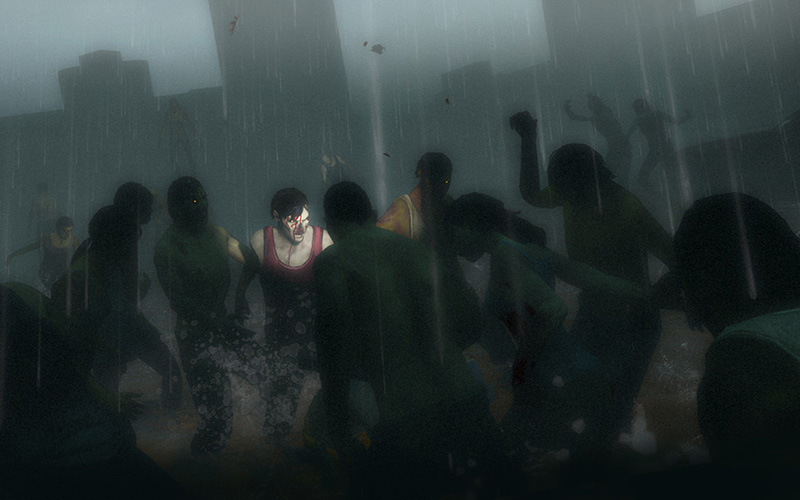
I've been playing Left 4 Dead 2 a lot recently, and quite enjoying it. Several months ago, Valve introduced a new game-mode called Mutation, a weekly-variegating modification of standard game types. There have been fourteen mutations thus far, an impressive count. And each offers a new perspective on the norm. Valve's mutations not only experiment with permutations of their game modes, but also revise and restate the emotional affect of a mode's gameplay by increasing the sense of impact, necessity, and intensity.
Two modes I've been exploring much of lately are Follow the Liter and Healthpackalypse.
Follow the Liter
Follow the Liter is a mutation of far-and-away my favorite game mode, Scavenge. In Scavenge, two teams of players take turns as the survivor team, collecting as many of sixteen available gas cans as possible, and, subsequently, preventing the opposing team from doing so as special infected. Follow the Liter more strictly narrows the objective by allowing only a certain patch of cans to be collected at a time. A new patch spawns for collection as soon as the current has been dumped.
In Scavenge, the survivor-team has the upper-hand. Survivors are equipped to fell infected easily, especially experienced players who know what to expect. The challenge for infected is communicating coordinated, timely assaults that can incapacitate the survivor team. The trouble is, with cans spread widely throughout a level, infected players often have difficulty predicting where the survivors will aim for next, excepting that they're eventually guaranteed to fuel the generator. Therefore, infected players must be constantly communicating to be one step ahead of the survivors and pull off a successful gank, a task only experienced teams can negotiate. To be fair, survivors must also communicate direction frequently lest one of their team wander off in the wrong direction.
Follow the Liter is an excellent riff on Scavenge and, in my opinion, a superior game mode. Follow the Liter punctuates the core emotional qualities of Scavenge, more strictly defining the gameplay experience. Because infected have guaranteed knowledge of a survivor's run for cans, they can better prepare for the advance and coordinate a joint-strike. The middle-man of maintaining rank becomes much easier to manage and more minute planning takes precedent. Survivors are funneled into a choke-point each run for cans, and infected can focus on simply timing their spawns and locating specific spawn locations for optimal attacks rather than foolishly chasing down survivors in frustration or spawning into a shotgun from feeling rushed. The crux of the matter is that Follow the Liter, as opposed to Scavenge, allows the infected team to feel more powerful, in control, and dominating, boons of the horror trade and the source of enjoyment as infected characters. The mutation accentuates what is already so good about Scavenge by more strictly tightening the rules. The mode creates pressure. And every impact as a result is energized and charged with greater force.
As survivors, Follow the Liter at the very least encourages unified formation rather than allowing players to assume their own pairs and venture on improvised paths. On one hand, this structure of sequenced singular goals incites teamwork and cohesion, especially since players know to expect more effective attacks, and where. On the other hand, though, allowing only one present objective arguably stunts creativity, barring surprising and diversified approaches to can retrieval. In fact, I would say this is Follow the Liter's comparatively greatest fault, negating the myriad of styles of can collection offered to survivors, for two reasons. First, standard Scavenge is creatively liberal, offering multiple approaches for survivors. Part of the fun of scavenge is discussing with your team members and attempting the most efficient or surprising strategy to collecting cans. Second, the level and objective design of standard scavenge is nearly begging survivors to split up and open themselves to vulnerability. Much like the cave of wonders scene in Disney's Aladdin when Abu can't help touching the ruby despite both his own and Aladdin’s best interests, Survivors often have trouble working as a unit. Scavenge is invitation for schism between survivors, an invitation readily gobbled by keen infected. Staying focused and communicative is the mark of a good Scavenge team, something Follow the Liter arguably somewhat negates.
The last things I would like to mention about Follow the Liter is that rounds are shorter than Scavenge, a good thing, and that rounds are potentially more balanced because each team is required to run the same gauntlet as the opposition. Furthermore, mistakes are more harshly punished. A failed gank on any single patch of cans means two to three guaranteed points for the survivors and an additional forty to sixty seconds on the clock. Likewise, destroying cans, either as spitter or by tricking survivors into shooting them, bears greatly increased consequences, as survivors are unable to switch tacks for new cans, but must wait in agony for the destroyed to respawn, time ticking away all the while.
Healthpackalypse
For one main reason, I never played much Versus: I didn't feel as though my attempts as an infected had any impact on the survivors' progress. Versus is where the L4D elite go to play. Many players are so good at playing survivors, a less-than-perfect attack from an infected is swept easily aside. An infected team must perform flawless ganks to even remotely impact the opposing team.
Far more importantly, though, is the emotion derived from versus. As infected, a botched attack accomplishes nothing and is frustrating. One reason for this is because any damage dealt can be readily healed away with pills or a health pack. Suppose an infected player deals forty damage to a survivor before getting killed. The player may have even downed the survivor. No worries. The survivor just pops some pills or wraps up his wounds real fast. No harm done. All that effort, if not, in fact, wasted, feels wasted. Sure, that survivor wont be able to use his or health pack later on which may eventually cause trouble, but the present feeling of the infected is one of disappointment and failure. In my opinion, healing in Versus is a handicap, achieving not much more than to prolong deserved victory.
However, there is one reason I appreciate the presence of healing: the intellectual gamble of timely healing. People are greedy and arrogant. Players like to wait until the last moment to heal themselves because they want to horde their pills or health for as long as they are able. Unfortunately for them, their hubris is often their downfall, falling prey to infected before they “get the chance” to heal-up. Survivors acutely feel this balance of risk and reward because they do not want to use their health packs until they can receive the item's full benefits. Pills are a larger problem, in terms of game design, because they temporarily heal thirty health almost instantly, meaning they can be used at even 70% of full health and still receive the full benefit.
But I digress. Healthpackalypse is mutation of Versus, removing all health items from the game. No pills, no adrenaline shots, no health packs. Only a single health bar fast on it's way to depletion. Survivors can no longer heal-up and move on; any damage they sustain stays that way. This design has fascinating repercussions on the experience. Infected players have easier opportunity for more individual impact because even fifteen damage has an effect. It feels amazing to deal damage and relish the fact that your victims are unable to undo your efforts. However, for the very same reason, that any attack is damaging and has an impact, infected team-play is less essential. Teamwork and cooperation is still extremely effective, fun, and recommended, but the mutation lessens it's necessity.
Healthpackalypse for survivors, meanwhile, is a more tense, frightening, and suspenseful experience. Mistakes carry larger consequences because the Ctrl+Z function has been removed. Cooperation is vital. It is in a way the reverse of the affect upon the infected experience. Solo play is disastrous because healing is impossible. This incites unifying teamwork.
Valve's mutations are interesting revisions of their established game-types. As revisions, they offer different experiences, some positive, others negative. It's great to see a company still experimenting with what has been a proven success, stating that maybe there is room for improvement yet. Largely, I think at least these two mutations discussed help to accentuate the emotional qualities of the modes but dilute the intellectual qualities. And game design aside, as a marketing strategy, mutations are genius, hypothetically rejuvenating the established player-base while inspiring new customers. Especially when paired with Valve's approach to free DLC, like The Sacrifice coming October 5th, mutations are refreshing a game nearly a year into it's life, a long time for most video games.
Image Source
Monday, June 7
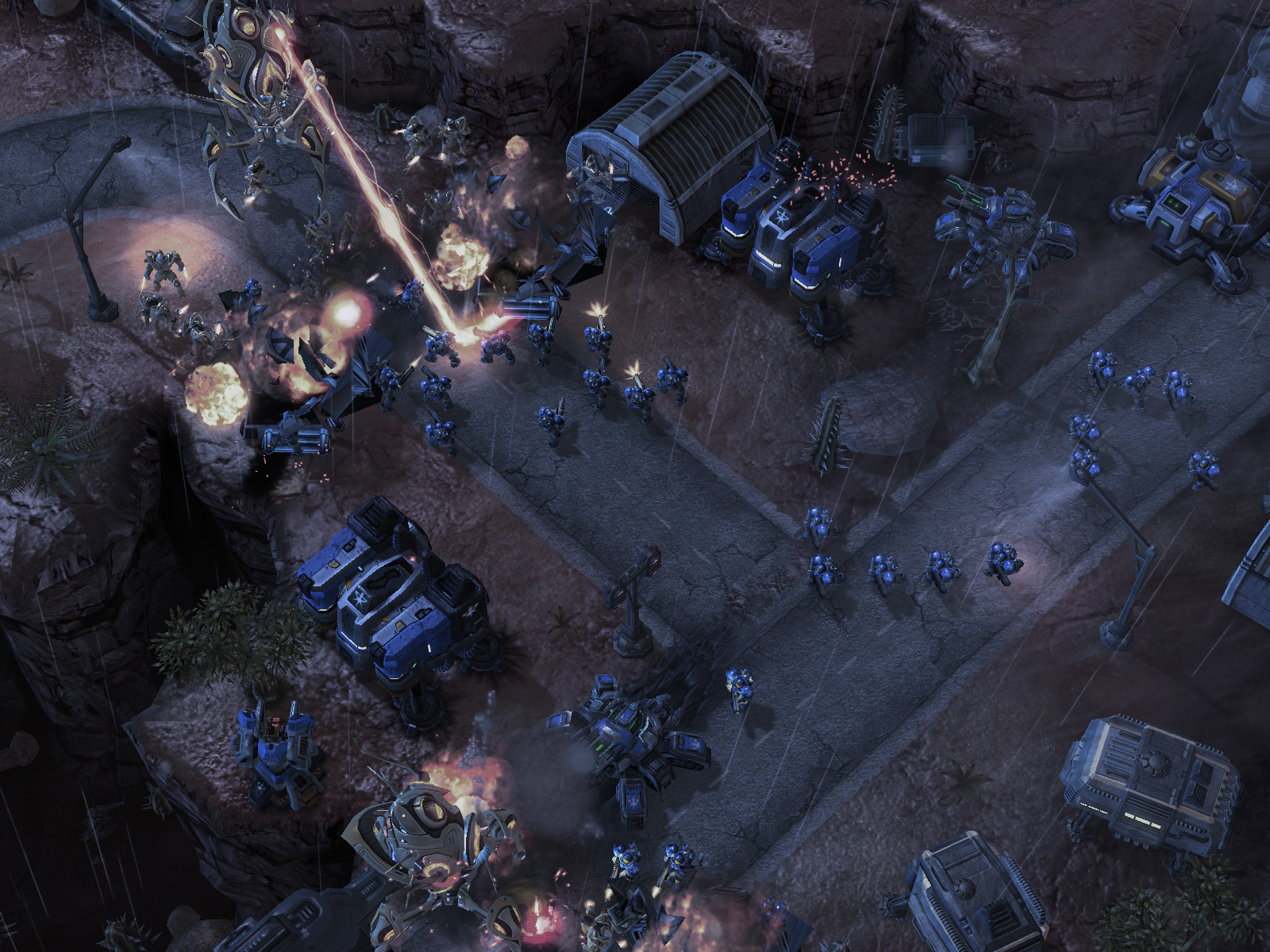
StarCraft II Beta Preview
Retroactive Haitus
Hey there! Long time no see.
If you're a regular reader of Invisible Studio, you may have been wondering where I've been for so long. Well, the story goes that this winter, around early February, I decided that I didn't want to sit around my house all Spring; I needed to get out and do something different for a while So, using a heinous sum of my funds, I traveled to Peru for seven weeks, to the city of Cuzco, and volunteered. I taught English to students in a low-income elementary school, took Spanish classes for myself, and on the weekends, I went hiking. It went alright. I met some awesome people, learned some things about teaching a foreign language, and saw some of the most gorgeous scenery Gaia has to offer. But now I'm back; well, temporarily.
For the past couple of weeks and for this next week, I am interning at the University of Tennessee Press in Knoxville, learning all about the publicity side of the publishing business. More or less, I'm mailing out letters and review copies of books, writing press releases, and converting book descriptions into short copy (150 words). It's a good time. Come June 16th, however, I'll be traveling up to Ann Arbor, Michigan to act as Lead Instructor at a technology camp, third year running (though my first time at the Michigan location). At camp, I'll be working no less than sixteen hours a day, so I might disappear for more or less, precisely, seven weeks, but I'll try to drop in for a post or two when I get the chance. That said, I've yet to finish my Warcraft III mod, Manifest, and I'll likely take what free time I can garner to work on finishing up that. Pre-Peru, I was running into some pretty darn tough road-blocks that I'll have to deduce some means of overcoming sooner or later.
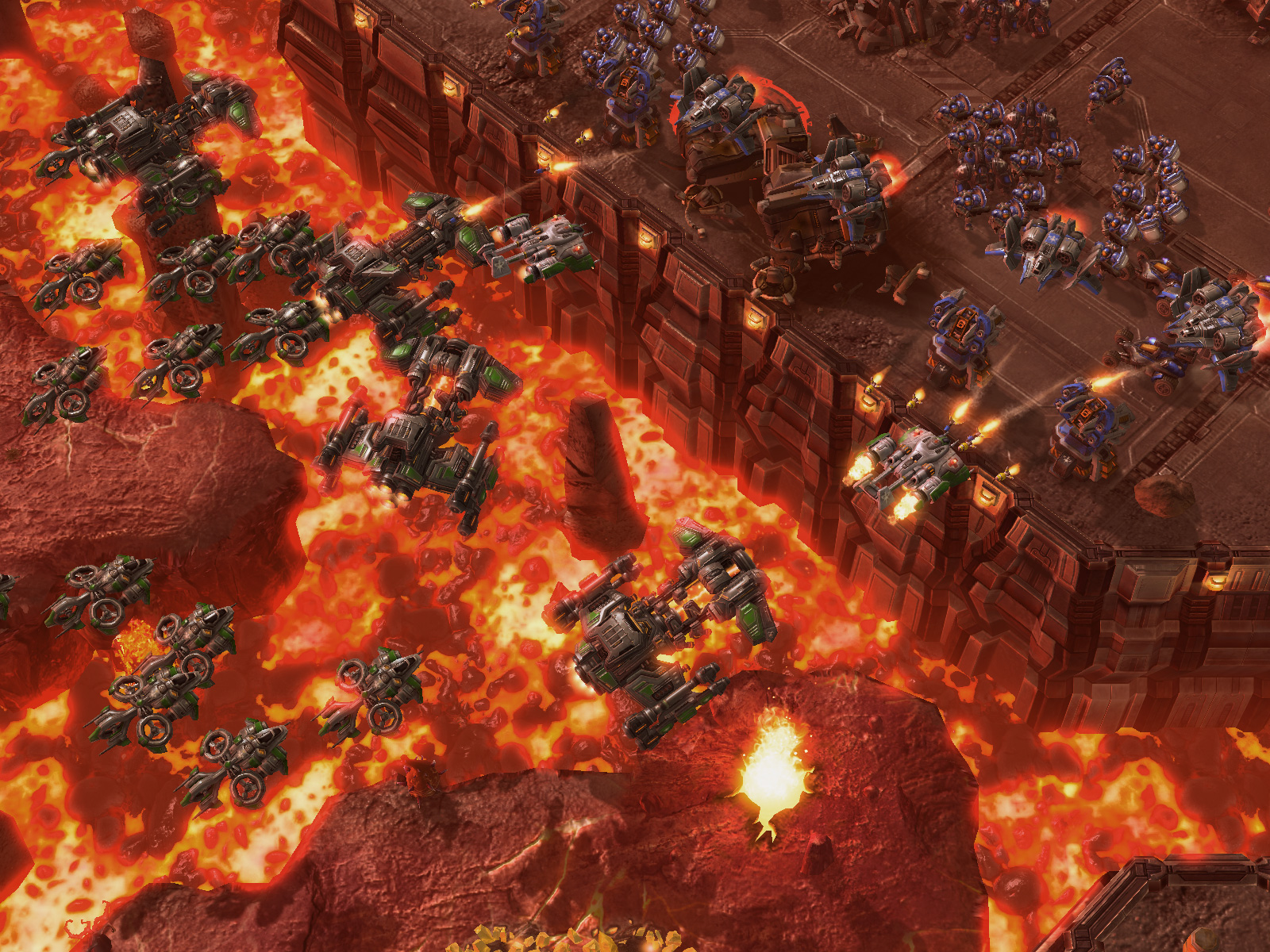
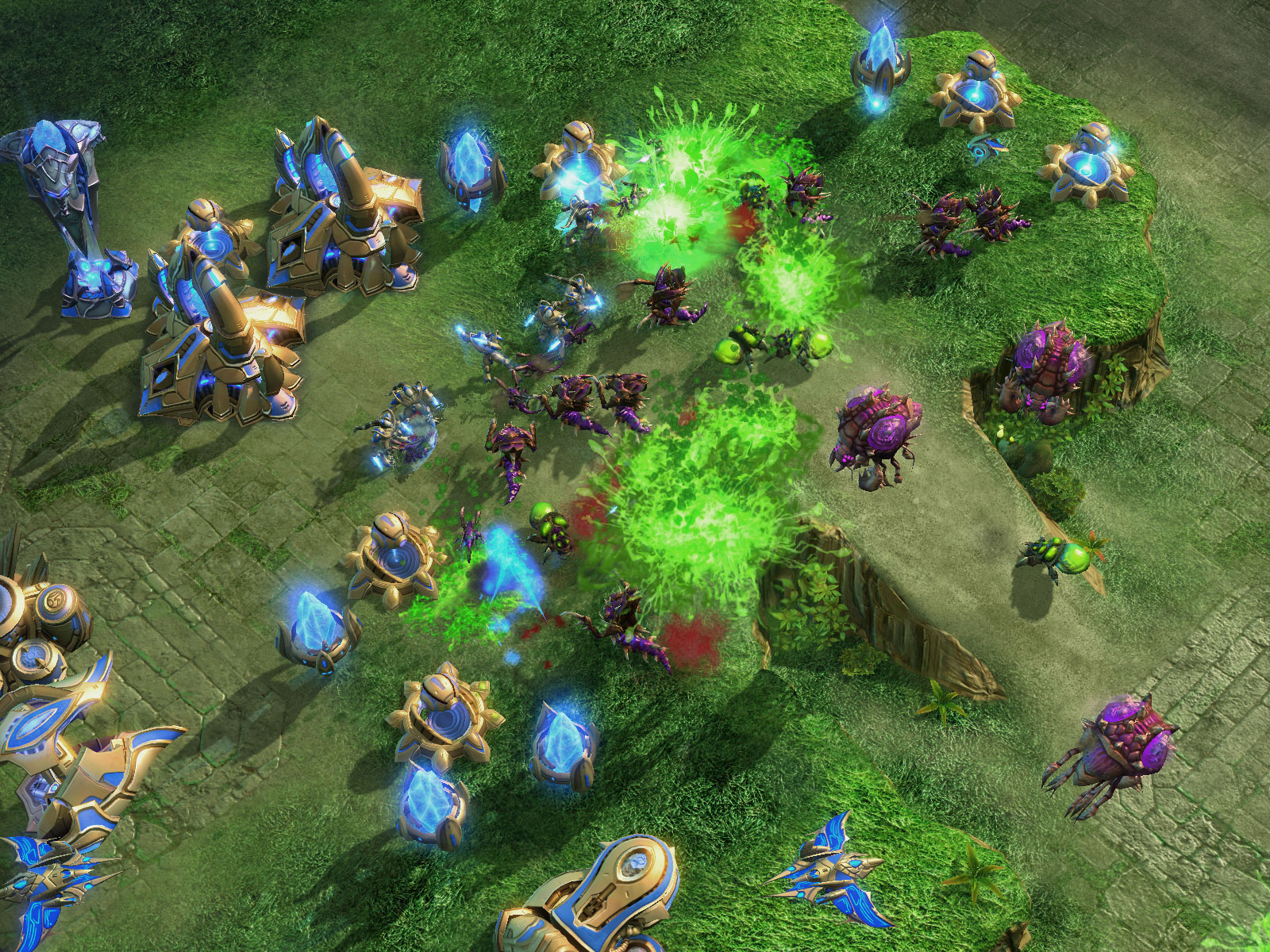
Tonight, though! Tonight, I have for you a brand new article, a preview of StarCraft II from my copious, over-zealous time spent with the beta. *Sniff* A beta that ends tonight. But all is well, because now I'll have more time to play Shattered Horizon and the awesome new content Futuremark has released for the title. Within a couple of days here, I'll have an updated review of Shattered Horizon. Look for it. Great to be back. Thanks for reading.
Image Source
Tuesday, January 26
Manifest Blog on ModDB
Monday, January 25
Manifest Development Blog
Fortunately, the game's awesome. It's called Manifest, and it's a competitive, two-player, turn-based strategy game. I'm developing it alone and spending exorbitant amounts of time doing so. In a few weeks, I intend to have an open beta, after-which I'll be releasing the game for free for all to enjoy. I love Warcraft III mods; I truly do. I feel that the completion of this mod is my way bringing closure to a pivotal aspect of my life. Warcraft III made up much of my teenage years, and the editor itself allowed me to realize that I wanted to be a game designer in the first place. I'm having an excellent time making Manifest, and the game has finally progressed to a point where I can begin showing it to people. With that in mind, I have begun another (gasp!) blog chronicling the development of Manifest on Edge. "Another blog!" you say, "but you have a perfectly good blog right here." You're points are legitimate, but I wanted to keep this dev blog separate, as I see Invisible Studio as focusing on my opinions on game design and game commentary. Also, I wanted my development blog to have the opportunity to be viewed by lots of people, something I didn't see as feasible with this blog. I'll continue to update this blog with all issues of design and commentary, but I'll also be updating the Manifest blog each day on features of the game and the development process. Check out the Manifest blog here. And thanks for your continued support.
Monday, January 18
Left 4 Dead 2 Pipe Bomb Trick
For rounds following, we each take turns trying to peg the canisters, usually with mild success. But, today, I joined another round at the Motel and, lo and behold, more people were trying the Pipe Bomb Trick. It went freaking viral. Fortunately, I was prepared, armed with my trusty WeGame recorder for just such occasions. I managed to catch on tape many successful pegs, as well as some failures. I used Pinnacle Video Spin 2 to splice the videos together along with some editing.
Check it out.
Source: Left 4 Dead 2 Pipe Bomb Trick