Showing posts with label multiplayer. Show all posts

Monday, June 7

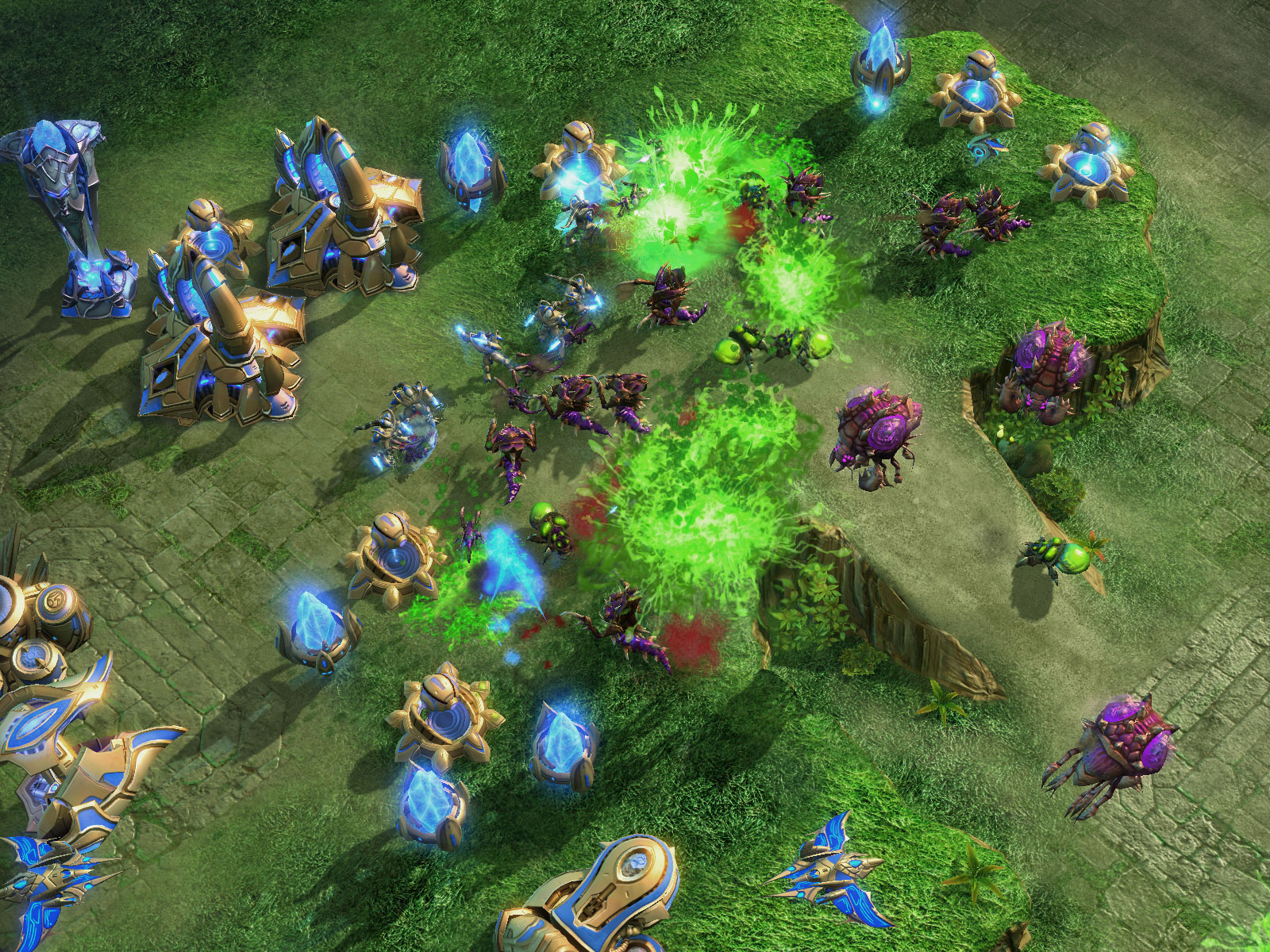
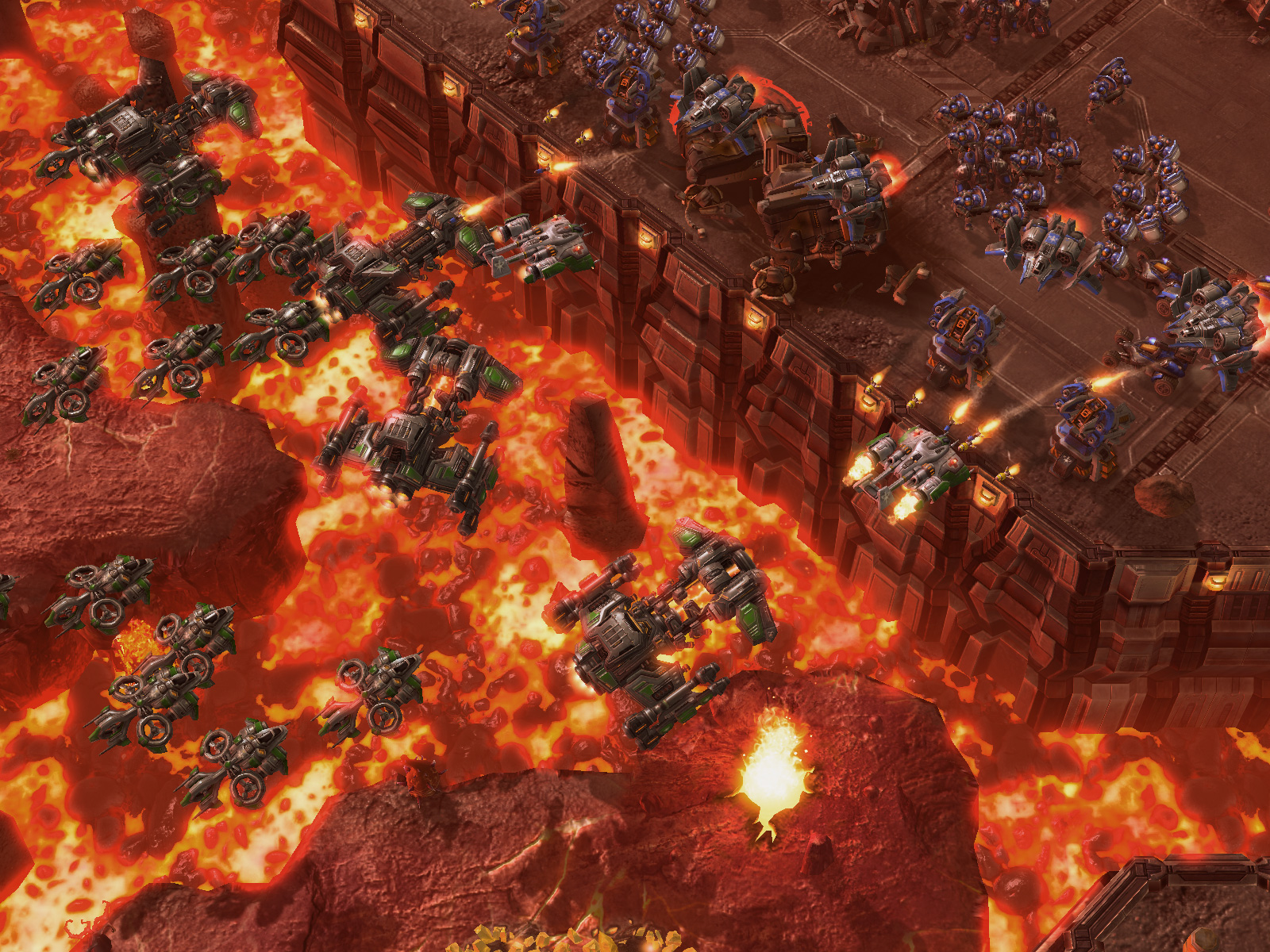
StarCraft II Beta Preview

StarCraft II is a dash for superiority. But depending on your skill level, "dash" may be better described as “scramble” or “strategic battle-plan.” Each match is a continual refinement of your game. Each mistake is an opportunity for lesson learned; likewise, each success.

Immediately when a match begins, go! No time to think, no time to blink, only do. The opening build is vital and demands exactness. Workers, more supply, a refinery: over the course of many matches, you will revise and whittle down these first dozen actions into a masterpiece of design. Even then, are you properly rallying your probes? Is your building placement ideal? There are always ways to improve. And all of it towards a specific object, each a milestone on the path to domination. That tiny edge is all you need to win. And you will need it.

Econ, macro, micro, tech, recon: each skill is essential, and your game is only as good as your lowest common denominator. All potential actions must be constantly considered and each given due attention. A finely-microed army will decimate an attack-move five days out of seven, though both this knowledge and the requisite reflexes come with practice. A floundering economy will be unable to fund an adequate army, and a poorly optimized economy will waste good resources that, contrarily, your opponent is likely applying. For recon though, there is no substitute. Scouting is unequivocally the most essential and mandatory skill in StarCraft II. Knowledge is power, as they say, a phrase which StarCraft II more than just practices, it requires.

In a recent match, I had finally decided to attack with Protoss ground-forces, and, quite easily, I demolished my opponent's base with little resistance. But something wasn't right; the base had no buildings other than a couple of pylons and refineries. Shifting my army to a fogged expansion, I realized to my horror that my Protoss opponent had not only early-expanded to a high-yield base, but that he'd also constructed his entire base there. My forces were torn apart by an abominable army, and promptly, I was destroyed. But all of this could have been prevented with a little scouting.

Awareness of your opponent's actions at all times is essential. Barring good scouting, you might win regardless, either by deductive prediction or simply black-mask-blind luck. Let your opponent get the upper hand, though, and you will certainly fail. While you may have a couple of starports reliably constructing banshees, and you're thinking your army is looking pretty good, your opponent may have three hatcheries out there, each with a queen, pumping out dozens of hydralisks every larvae cycle.
Somewhere on the spectrum between plan and reaction, there is a keen balance to be struck. Opening moves should guide you towards an initial or mid-game goal, but you must be willing to adapt to your opponent's strategies, and quickly. Fast-teching to tier three units like colossi or thors may sound like a good idea, but if you don't have the troops to defend yourself and injure your opponent's economy along the way, even a measly enemy force will topple your poor infrastructure.

StarCraft II is a glorious exercise in the learning process. At my skill-level, upper silver ladder, players are focusing on refining their macro, practicing new micro tricks, and just barely testing the waters of magic-casters. Mostly, we're simply massing two or three unit-types and, on occasion, sending forward a scout. Higher level players, meanwhile, are using magic-casters as a core function of their armies, are constantly aware of their opponent's movements and are frequently raiding mineral lines, and are employing more creative strategies, like baneling drops. These things come with experience. But Blizzard, in my opinion, has done an excellent job with their match-making system, and you'll almost always face opponents who are on the cusp of your skill level, just challenging enough without being impossible.

The races of StarCraft II bear plenty of differences, both in unit make-up and strategy. As well, each race requires a tailored counter-strategy, making for a good number of unique matches. Terran units are split into three classes: biological, mech, and air. Trying to build all three may make for a diversified, yet anemic, army. Focusing on two classes is generally advised as many units have supporting roles. The medivac can heal biological units, a popular strategy, and hellions can defend close-range assaults on siege tanks. The reaper, a fun, fast unit, can jump cliffs, perfect for raiding gatherers and sniping undefended buildings. Their use, however, is fairly limited beyond this early-game function. Terran have plenty of variety for experimenting with different army builds. And though I've played with them least, I find that they require the greatest macro of all the races, if only because they require significantly more buildings than the other races.
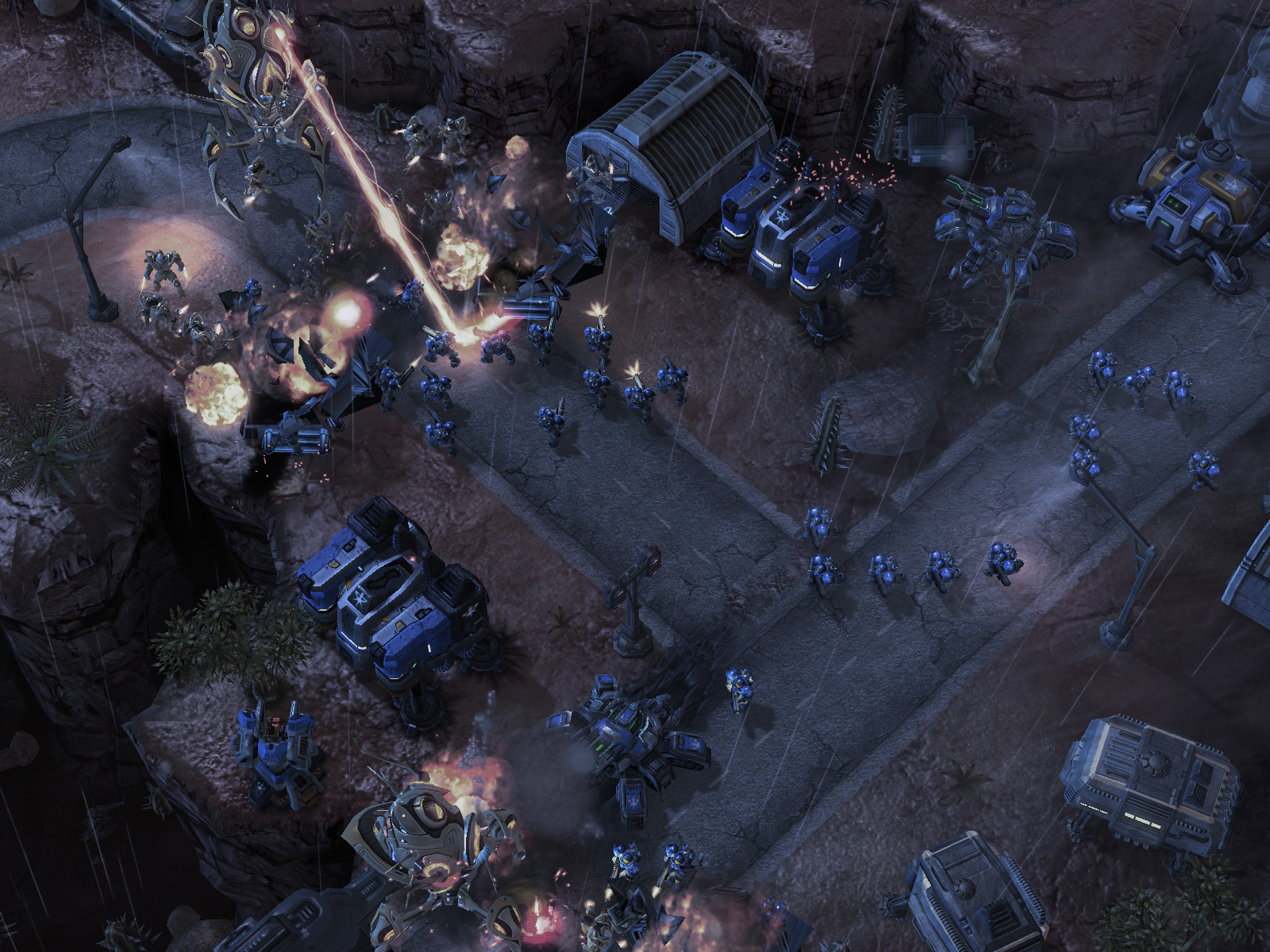
The Zerg are limited early game, particularly because they have no anti-air until tier 2.5, but mid-way through a match, they hit this sweet spot where they can churn out swathes of units extremely quickly. There has been a lot of discussion about the over-simplicity of the Zerg, unfortunately; and I must say that I agree. At least at my skill-level, there is little reason to produce anything but hydralisks. Or if you feel like going air, mutalisks. It is as if the Zerg's innate ability to easily mass units, either actually or perceptually, invites watered-down strategies, since massing one or two unit-types is often a clear path to an overwhelming dominance. That said, satisficing is really no fun. So if you can break the mold of the narrow-minded overmind, you'll find plenty of cool units to play with. The roach, despite its constantly in-flux usefulness, is still an awesome unit. Burrow-sneaking right into enemy bases is a ton of fun when you can pull it off, and its ability to rapidly regenerate health while burrowed is extremely useful. The brood lord is another fantastic unit. Morphed from the air-to-air corrupter, the brood lord exclusively attacks ground with tiny, clawing broodlings. Its range, means of distracting enemy fire, and sheer damage output make it an essential late-game member of any Zerg army.

The Protoss are fascinating to play. Their range of units offer excellent diversity and they have plenty of opportunity for creative strategy. Zealots are excellent throughout a game's duration. Immortals are pure beast; they perfectly counter heavy-fire enemies such as siege tanks. Void rays are unquestionably the most cited unit by the StarCraft II community as being over-powered, but they've been balanced out with a number of patches, and their unique (and effective) attack-style and aesthetics are remarkably enjoyable. The stalker, a tier two ground-to-air unit, in my opinion, is the most useful unit in the entire game. And it can blink past base defenses. The Protoss's first spell-caster is also an integral part of a good army and easily the most accessible spell-caster of any in the game.

StarCraft II is the very definition of an addictive game. Losing inspires me to improve, and winning emboldens further victory. Aside from this, the game is simply fun, lots of fun. There are still plenty of balance issues to be found, but the beta ironed out the most heinous, and Blizzard still has a month and a half before the have to pay the dues. Its sad to see the beta go, but on the bright side, I'll hopefully start being a bit more productive with its absence.

Sunday, December 6

Shattered Horizon Review


Entering silent running mode, the world fades away. Silence looms as all space is emptied of sound. The stuttered inhalations and exhalations in my helmet are my only companion and the only confirmation that I still live. I maneuver around an asteroid, praying to not be seen. Radar is dead; all I know is that which I can see. As I round the rock, a yellow-clad astronaut glows before me, his back to my face, the giant sphere of planet Earth blue in the distance. I hear nothing as I unload a burst shot into his tank. White gases whirl from the explosion, and the astronaut's grip on life is lost. He drifts into space, a puppet to fate.

The space-combat sim is the vision of Futuremark's Shattered Horizon, and for this vision, nothing is compromised. Each gameplay aspect is tuned, each element geared, a cog in the vision, each contributing to the play experience. And the experience is wonderful.

Scarce resources necessitate bitter war between the Moon Mining Company (MMC) and the International Space Agency (ISA). A string of disembodied rocks, an asteroid belt, serves as battleground; the International Space Station, as well, a mega-structure of reflective panels and sheet-metal middled in a disarray of rock chunks and cargo boxes; a mining facility, a tunnel gaping, bored through an enormous asteroid, filled with splitting, angular passageways, electronic posts, and a “Zero-G Spot” theatre for off-duty miners. Though levels initially seem nonsensically formed, each is specifically constructed to promote tactical positioning. Multiple entrance paths access each command post, creating dynamic choke-points and allowing for unexpected assaults. Astronauts turned militant (up to thirty-two) strive to control and defend command posts throughout each level, or occasionally, seek only bloodshed.

Zero G is the keystone to all other elements of Shattered Horizon, impacting the emotional experience, the level design, and tactical combat. Zero gravity forces players to think tactics not along a singe plane but to be considerate of multiple axes. Levels are structured as guidelines, not binding rules, allowing for variance in strategy, tactical experimentation, and surprise. Indeed, direct assaults are overtly visible, only marginally effective, and ruthlessly dissuaded, encouraging spontaneous, creative approaches. The strategic topography of any situation is constantly shifting, enemies and allies, like lightning, never occupying the exact places twice. Players must be adaptive in their tactics or else be quickly gunned down.

Shattered Horizon offers one armament: a scope-equipped assault rifle and three grenade types, all of which are available on the fly. The lack of choice feels not limiting, but helps to dampen the gap between newer players and experienced; hard-boiled experience, instead, takes place as the prime player-skill differential. Veteran players are light-years ahead of newer players, dead-eye aim and sharply honed strategy acquired from thousands of kills notched on their rifles. Veteran presence is currently overwhelming, and new players are brutally taught through the time-proven art of failure. The learning curve is harsh and requires that players have significant patience. However, I was rarely frustrated by my failures, recognizing them as necessary steps towards mastery. And being an at least averagely frustrated gamer, I would say that my lack of anger towards the game is due to the sheer joy of each combat experience, success or no.

Combat success, as it were, is shared equally between aiming skill, proper use of grenades, and tactical positioning. Good aiming is vital. Headshots and tank shots, bullets to large oxygen tanks strapped to players' backs, are severely pronounced. Body shots, comparatively, are practically useless. Round after round unloaded into an astronaut's suit will yield nothing but the alerting of the target to your very loud presence. Headshots and tank shots, however, are rewarded with near-instant kills and are absolutely mandatory for survival. Players may also to cling to any surface: walls, crates, and terrain. Walking, naturally, slows movement speed but drastically improves aiming steadiness, a tactical trade-off between being an easy target and a better shot.

Rifles have powerful scopes and make sniping a viable and oft-used technique. A brief animation bridges the entering and exiting of scoped mode and necessarily ensures that players cannot point-blank spam the ten-shot burst. Grenades, also, may not be fired in scoped mode. Additionally, scoped shots fire in bursts of ten bullets, severely damaging targets if hit (even in the body), if not outright killing them.

Often in Shattered Horizon, you will see an enemy player, in the distance, nested from a sniping position. Being suddenly noticed by the enemy, you scope-in for yourself, hoping to headshot him before he does you. Tensity is rarely experienced like those euphoric levels from a sniping standoff, carefully aiming for his tiny pixels, he aiming for yours, while you count the few precious moments remaining before someone makes the fatal shot first. It is these powerful gameplay moments in Shattered Horizon that define the experience and motivate your desire to improve.

Grenades are a beautifully designed element of Shattered Horizon, cooperating perfectly with other gameplay aspects and augmenting the game's tactical combat. Grenades function as tactical support aides rather than damage bombs, each of the three either jettisoning players, disabling their suit's functioning and slowing their movement, or, like smokescreens, obscuring vision. In both critical moments and prepared strikes, knowing which grenade is equally as important as aiming prowess and consistently means the difference between victory and defeat. But bullets and grenades alone do not win battles, tactical positioning is infinitely valuable. Levels are architecturally arranged so as to promote reactive approaches to enemy strongholds. Walking on ceilings, sneaking from behind, and sidling along asteroids are all suggested maneuvers.

“Silent Running Mode” offers additional tactical options. Activating silent running powers down your suit, losing access to radar, computerized sound simulation, primary thrusters, and vitals information. With no assisted programs, both battlefield intelligence and maneuverability are highly restricted, making you a free kill for enemies by whom you are unlucky enough to be seen. But, alternatively, the tactical advantages and emotional experience are so very grand. Silent running turns out the lights on your suit, making you intrinsically difficult to see and negating your presence on enemy radar and HUD highlighting. But successfully breaching enemy lines and, incognito, dispatching of even one bewildered soldier is exhilarating and awe-inspiring. Space becomes very lonely and very frightening without sound as guidance. With your sensors shut off, unexpected attacks upon yourself come suddenly and harshly and cause you to constantly turn your back in fear. It's spectacular.

Enemies have at their disposal the same tools as you, however. Such open level design means you get ganked, often. Most deaths comes unawares, either from back-stab assassinations or from distant and shadowed snipes. The suddenness of death can be disheartening, especially when repeated, but player moral and friendliness is high, compliments like “nice one” usually rewarded for cool kills instead of hurtful slander. The mood is infectious, and mean-spirited attitudes are swiftly reprimanded by the small, dedicated player-base.

Shattered Horizon falters in one pivotal, prominently featured area: teamwork. And teamwork is lackluster for one primary reason: the lack of voice chat. In an age where voice chat is expected, the absence of the feature feels strange and hampers a lot of potential for synchronized tactics. Text chat being the only means of team coordination at this point, the barrier to cooperative efforts is simply too great. The game plays marvelously well regardless, but voice chat and, subsequently, teamwork could propel the game towards an even greater state of excellence. Fortunately, players and developers alike are well aware of the missing voice chat; it is the most highly requested addition to the game. Upon the inevitable patching-in of voice chat, I will give an updated report on the resulting changes. It should prove interesting.

Shattered Horizon is a unique experience among shooters, but I feel that it has much potential to even further differentiate itself by more specifically emphasizing its tactical, zero gravity gameplay. The drastic difference between headshots/tank shots and body shots, I believe, could be dampened. As the game stands, spatial positioning is important, but rushing headlong into enemies can still be plenty effective, especially when the charging player is experienced and lands headshots easily. Advanced players and beginners are vastly opposed in skill; most teams feed off the success of one-man, herculean professionals for victory, pro players easily quadrupling the kill/death ratio of noobs.

By improving damage dealt to the body, I hypothesize that players would be motivated to assault more tactically more frequently, as even professionals are susceptible to blatant gunfire. This simple change would lessen the valley between pros and noobs and would be less punishing to new players who haven't yet grasped the acuteness of aiming. Tactics and understanding of three-dimensional space would take the primary spots as necessary skills for success and would positively separate Shattered Horizon from other shooters, most of which prioritize headshots over other skill-sets. Tactics is where Shattered Horizon is most interesting, most fun, and most fitting to the space simulation combat, and I feel the game could only benefit from empowering the use tactics even more greatly.

Every aspect of Shattered Horizon is tuned to augment the unique feeling and experience of combat in space. It is the developer's devotion to the experience, palpable when playing, that allows Shattered Horizon to excel as an engaging, fun, and awesome game.

Tuesday, January 30

Rock Paper Scissors - A Method for Competitive Game Play Design

Gamasutra, a fantastic resource for game design enthusiasts, has recently featured an article written by and entitled Rock Paper Scissors - A Method for Competitive Game Play Design.

The article discusses creating an effective competitive multiplayer gaming system. How does one achieve this? Chelaru argues that the game should be balanced according to a signals and reactions. All attacks should be preceded by a signal, generally in the form of a character's animation. A defender should be able to read the signal and counter. Chelaru goes much deeper, eventually describing "fakes" and multiple signals.

Here is a good excerpt from the piece:

The presence of obvious, well-timed signals can greatly enrich the play experience. Keep in mind that for a signal to be effective in enriching the play experience, the player must be aware of the RPS relationship between the attacks. There are three criteria which must be present at this point:

  1. Each attack must have a known and effective defense or counter attack.

  2. Each attack must present a signal that is detectable.

  3. Each attack must occur after the signal at a time interval which allows the defender to react.

The read is rather enlightening. It discusses things we've always known, but defines them and disects them to a microscopic level. Read Away, and come back with any comments you may have on the article.