Showing posts with label online. Show all posts

Monday, June 7

StarCraft II Beta Preview

StarCraft II is a dash for superiority. But depending on your skill level, "dash" may be better described as “scramble” or “strategic battle-plan.” Each match is a continual refinement of your game. Each mistake is an opportunity for lesson learned; likewise, each success.

Immediately when a match begins, go! No time to think, no time to blink, only do. The opening build is vital and demands exactness. Workers, more supply, a refinery: over the course of many matches, you will revise and whittle down these first dozen actions into a masterpiece of design. Even then, are you properly rallying your probes? Is your building placement ideal? There are always ways to improve. And all of it towards a specific object, each a milestone on the path to domination. That tiny edge is all you need to win. And you will need it.

Econ, macro, micro, tech, recon: each skill is essential, and your game is only as good as your lowest common denominator. All potential actions must be constantly considered and each given due attention. A finely-microed army will decimate an attack-move five days out of seven, though both this knowledge and the requisite reflexes come with practice. A floundering economy will be unable to fund an adequate army, and a poorly optimized economy will waste good resources that, contrarily, your opponent is likely applying. For recon though, there is no substitute. Scouting is unequivocally the most essential and mandatory skill in StarCraft II. Knowledge is power, as they say, a phrase which StarCraft II more than just practices, it requires.

In a recent match, I had finally decided to attack with Protoss ground-forces, and, quite easily, I demolished my opponent's base with little resistance. But something wasn't right; the base had no buildings other than a couple of pylons and refineries. Shifting my army to a fogged expansion, I realized to my horror that my Protoss opponent had not only early-expanded to a high-yield base, but that he'd also constructed his entire base there. My forces were torn apart by an abominable army, and promptly, I was destroyed. But all of this could have been prevented with a little scouting.

Awareness of your opponent's actions at all times is essential. Barring good scouting, you might win regardless, either by deductive prediction or simply black-mask-blind luck. Let your opponent get the upper hand, though, and you will certainly fail. While you may have a couple of starports reliably constructing banshees, and you're thinking your army is looking pretty good, your opponent may have three hatcheries out there, each with a queen, pumping out dozens of hydralisks every larvae cycle.
Somewhere on the spectrum between plan and reaction, there is a keen balance to be struck. Opening moves should guide you towards an initial or mid-game goal, but you must be willing to adapt to your opponent's strategies, and quickly. Fast-teching to tier three units like colossi or thors may sound like a good idea, but if you don't have the troops to defend yourself and injure your opponent's economy along the way, even a measly enemy force will topple your poor infrastructure.

StarCraft II is a glorious exercise in the learning process. At my skill-level, upper silver ladder, players are focusing on refining their macro, practicing new micro tricks, and just barely testing the waters of magic-casters. Mostly, we're simply massing two or three unit-types and, on occasion, sending forward a scout. Higher level players, meanwhile, are using magic-casters as a core function of their armies, are constantly aware of their opponent's movements and are frequently raiding mineral lines, and are employing more creative strategies, like baneling drops. These things come with experience. But Blizzard, in my opinion, has done an excellent job with their match-making system, and you'll almost always face opponents who are on the cusp of your skill level, just challenging enough without being impossible.

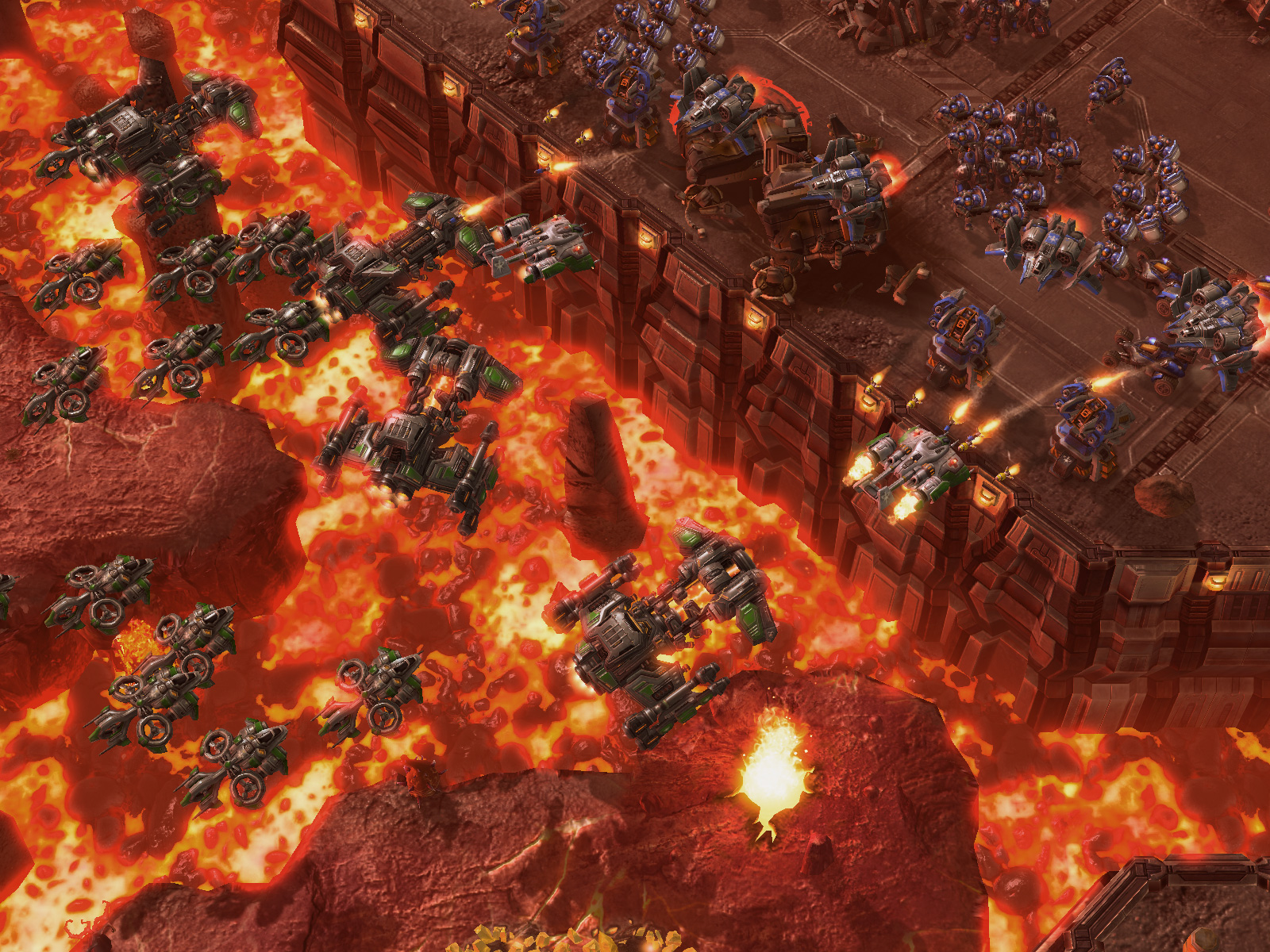
The races of StarCraft II bear plenty of differences, both in unit make-up and strategy. As well, each race requires a tailored counter-strategy, making for a good number of unique matches. Terran units are split into three classes: biological, mech, and air. Trying to build all three may make for a diversified, yet anemic, army. Focusing on two classes is generally advised as many units have supporting roles. The medivac can heal biological units, a popular strategy, and hellions can defend close-range assaults on siege tanks. The reaper, a fun, fast unit, can jump cliffs, perfect for raiding gatherers and sniping undefended buildings. Their use, however, is fairly limited beyond this early-game function. Terran have plenty of variety for experimenting with different army builds. And though I've played with them least, I find that they require the greatest macro of all the races, if only because they require significantly more buildings than the other races.
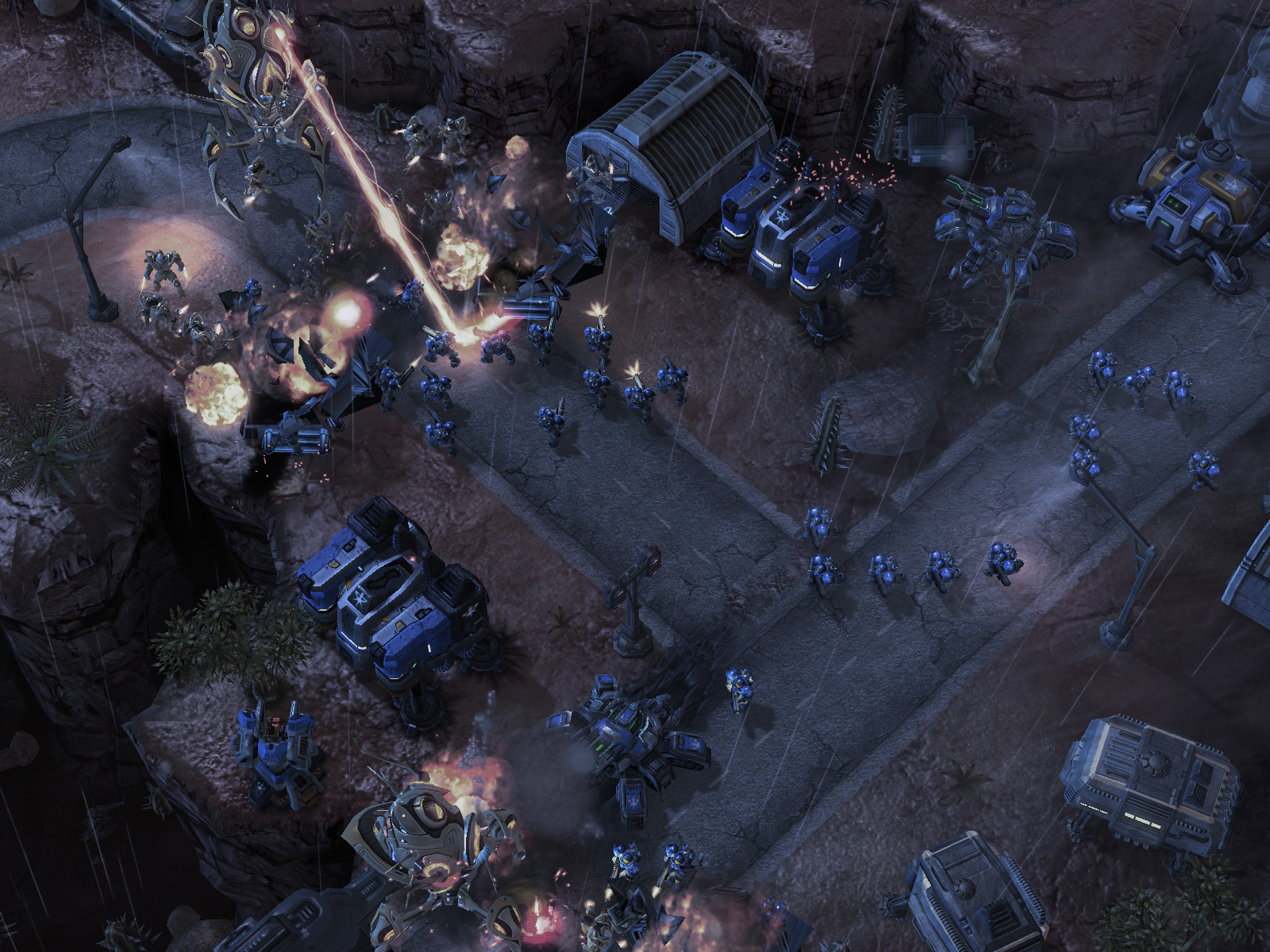
The Zerg are limited early game, particularly because they have no anti-air until tier 2.5, but mid-way through a match, they hit this sweet spot where they can churn out swathes of units extremely quickly. There has been a lot of discussion about the over-simplicity of the Zerg, unfortunately; and I must say that I agree. At least at my skill-level, there is little reason to produce anything but hydralisks. Or if you feel like going air, mutalisks. It is as if the Zerg's innate ability to easily mass units, either actually or perceptually, invites watered-down strategies, since massing one or two unit-types is often a clear path to an overwhelming dominance. That said, satisficing is really no fun. So if you can break the mold of the narrow-minded overmind, you'll find plenty of cool units to play with. The roach, despite its constantly in-flux usefulness, is still an awesome unit. Burrow-sneaking right into enemy bases is a ton of fun when you can pull it off, and its ability to rapidly regenerate health while burrowed is extremely useful. The brood lord is another fantastic unit. Morphed from the air-to-air corrupter, the brood lord exclusively attacks ground with tiny, clawing broodlings. Its range, means of distracting enemy fire, and sheer damage output make it an essential late-game member of any Zerg army.

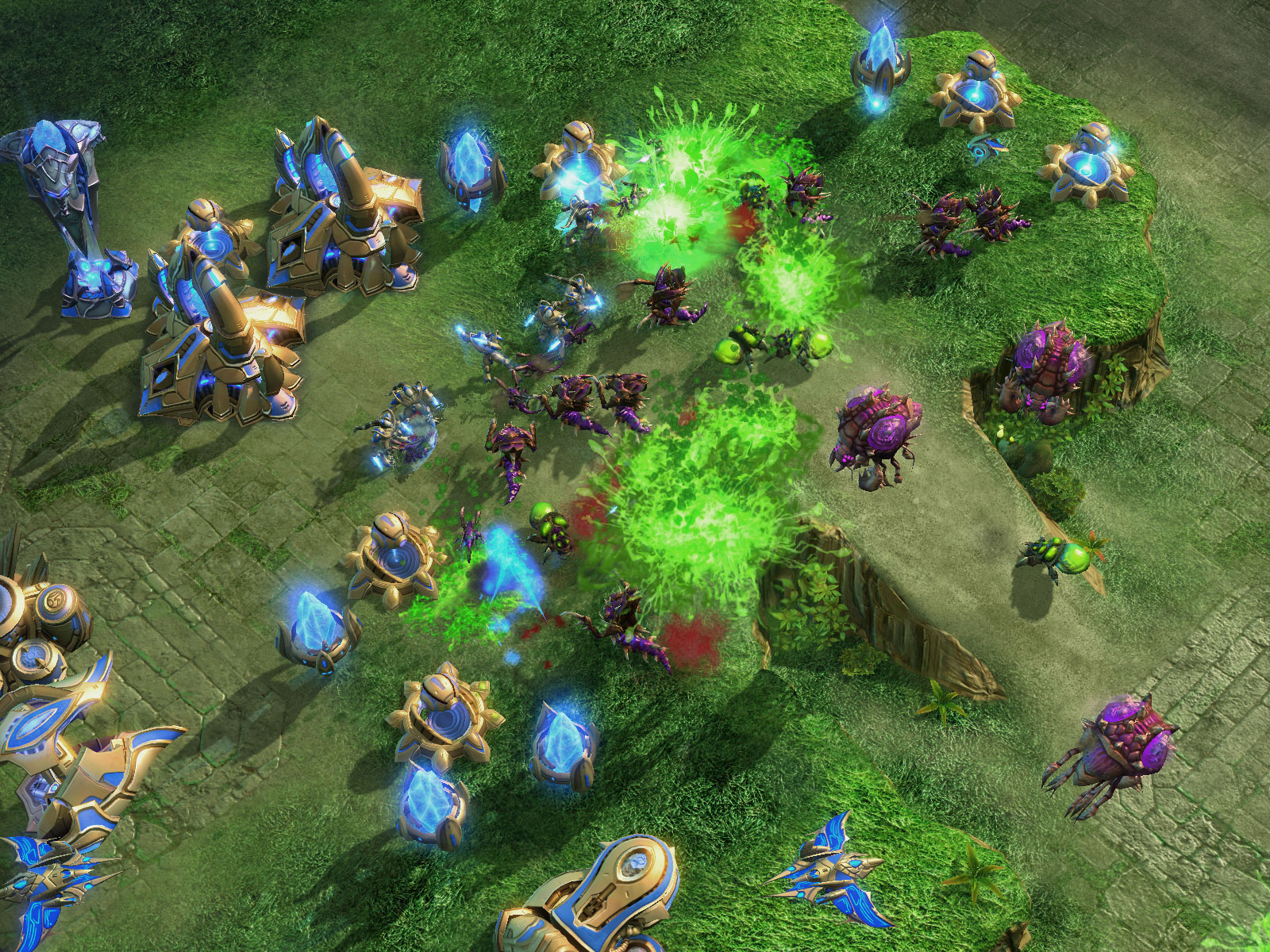
The Protoss are fascinating to play. Their range of units offer excellent diversity and they have plenty of opportunity for creative strategy. Zealots are excellent throughout a game's duration. Immortals are pure beast; they perfectly counter heavy-fire enemies such as siege tanks. Void rays are unquestionably the most cited unit by the StarCraft II community as being over-powered, but they've been balanced out with a number of patches, and their unique (and effective) attack-style and aesthetics are remarkably enjoyable. The stalker, a tier two ground-to-air unit, in my opinion, is the most useful unit in the entire game. And it can blink past base defenses. The Protoss's first spell-caster is also an integral part of a good army and easily the most accessible spell-caster of any in the game.

StarCraft II is the very definition of an addictive game. Losing inspires me to improve, and winning emboldens further victory. Aside from this, the game is simply fun, lots of fun. There are still plenty of balance issues to be found, but the beta ironed out the most heinous, and Blizzard still has a month and a half before the have to pay the dues. Its sad to see the beta go, but on the bright side, I'll hopefully start being a bit more productive with its absence.

Friday, September 4

Or, How My BFF Backstabbed Me

Remember when Tetris Friends and I used to be best buddies? Well, now there's a sequel, and things just got S-blocky.

Wednesday, July 9

The Witcher: VERSUS!

The Witcher: Duel Mail was first launched a few months ago. But that was just a beta. Today, CDProjekt and one2tribe launched The Witcher: VERSUS!, the full-release version of the originally titled Duel Mail. Also, everything from the beta was reset, so everyone has to restart their characters from scratch. I played Duel Mail when it was first released; in fact, I was rather obsessed with it. And for good reason. The game plays itself.

The Witcher: VERSUS!
is a free, in-browser, flash-based multi-player game. The characters and mechanics are, naturally, all drawn from CDProjeckts 2007 PC title, The Witcher. The gameplay, however, is anything but. Players choose to play as one of three character classes: a witcher, a sorceress, or a frightener. From then on out, gameplay revolves around setting up one-on-one duels with other players. Below is a screenshot of the primary menu screen.
The left column is a list of duels that have taken place. The middle column is challenges I've either sent or received. And the top right is stats on my character. Players can both initiate duels or accept challenges initiated by other players. Actual duels function similarly to rock-paper-scissors. Players fill slots in two separate bars with sequences of attack and defense maneuvers. Skills are split into four types: strong, fast, magic, and special. Generally speaking, each type is a counter to itself. Strong-type attacks will be blocked by strong-type defense, fast-attacks by fast-type defense, and so on. As characters gain levels, though, skill points can be allocated to upgrade current skills or purchase new ones. New skills offer special abilities, passive buffs, and additional damage or defense bonuses. Half of playing this game well is carefully planning your path down the four skills trees. The other half to winning is predicting your opponent's moves.
The battle screen.
Once the attack/defense sequences are slotted, players push "Fight!" to initiate the duel. If you have accepted a challenge, the duel will play-out immediately, showing with fairly impressive graphical representation, the duel and thereafter the results. Watching is intense, to say the least. Characters take turns attacking and defending in the sequence order previously arranged. Nothing is real-time. "Everything must be planned beforehand," as the loading screen often prompts. So much of winning depends on guessing what you're opponent will do and hoping that your respective battle sequences pan out in your favor. Winning is glorious. Your opponent dies, and suddenly you come back to your main screen where you discover you've gained a level. Losing, on the other hand, is the very definition of disappointing, especially when you realize your win/loss count is being tracked for all to see. My win/loss record stays at a fairly consistent 50/50 ratio.

The best part of the entire VERSUS! experience is that it plays itself. Or at least that's how it feels. When you challenge an opponent, the duel is stored away until the opponent accepts your challenge. When the challenge returns with the results, it appears in the left-hand bar as a question mark, teasing you with a video of the duel. But the downtime after challenging an opponent is extremely exciting. You can go off, do homework, mow your lawn, whatever. And all the while you know that, when you return, one of your challenges will have been accepted. So the game keeps itself on your mind, often, if your on the Internet already, begging you to compulsively check your challenge results. And so begins the cycle of Internet game addiction. However, with the whole "our game plays itself when your not here" aspect, The Witcher: VERSUS! manages to remain fun, addictive, and minimally time consuming. That's what I call good game design.

The Witcher: Versus! is a very well executed game, especially considering it was made with flash. It's seriously fun and you should check it out asap.

Tuesday, July 8

Google is Alive

Just when I was planning on writing a series of posts concerning Internet games, here comes Google and launches a brand new web browser game. Google Lively was both announced and launched (as a beta) today. Lively is a free, in-browser, avatar-based chat service. And it is really cool.

You may notice a new addition to Invisible Studio's sidebar today, our own Google Lively room. I'll be in and out and feel free to drop in to talk about whatever, whenever.

But back to Google Lively. The service is really quite impressive. Users assume their own avatars, enter rooms wherein inhabit other avatars, and chat like we have since 1999. Essentially, Google Lively adds a graphical-user-interface to the standard chat system. Its been before, Sulake's Habbo being a good example. But where Google excels is popularity. Already, there are likely thousands using the Lively service. And for good reason; Lively is an excellently executed program. The interface is clean, easy to use, even intuitive. Which, for Google's intended audience, is highly necessary.
It's Alive

Customizing your avatar initially seems quite limited. But that's before you realize there's a catalog filled with a wide selection of apparel. Your avatar can be personalized pretty well, which is important for an avatar-based chat service. Aside from text chatting, users can speak to each other visually using emote animations. The animations themselves are quite expressive as well, exaggerated body signals. My personal favorite is "speak no evil."

Anyone can create a room and customize it how they please. The catalog also has quite a few furniture pieces. Users choose from a small set of "shells" off which to base their room, and go crazy from there. Rooms can be outfitted with furniture, fish tanks, plants, tv screens, and picture frames, the latter two of which can be embedded with pictures or youtube videos. Any object can also be given a hyperlink.

Google Lively is really a fun service. If you're going to be chatting anyway, and your computer and Internet connection can handle it, why not chat with a cool avatar in a room designed by yourself. The service is actually quite similar to what PlayStation 3's Home will be later this year.

All of this is to say that Internet gaming is becoming bigger all the time. In-browser games are the new fad. Look at Battlefield: Heroes, Legions: Fallen Empire, both of these are complex 3D games that play in your Firefox browser. The prospect of triple-A, in-browser games is attractive. Its easy, generally free, and from what we've got so far, fun. And they will keep on coming; the rush has started.

images from google and affordable housing