Showing posts with label experience. Show all posts
Tuesday, September 28
Left 4 Dead 2 Mutations
I've been playing Left 4 Dead 2 a lot recently, and quite enjoying it. Several months ago, Valve introduced a new game-mode called Mutation, a weekly-variegating modification of standard game types. There have been fourteen mutations thus far, an impressive count. And each offers a new perspective on the norm. Valve's mutations not only experiment with permutations of their game modes, but also revise and restate the emotional affect of a mode's gameplay by increasing the sense of impact, necessity, and intensity.
Two modes I've been exploring much of lately are Follow the Liter and Healthpackalypse.
Follow the Liter
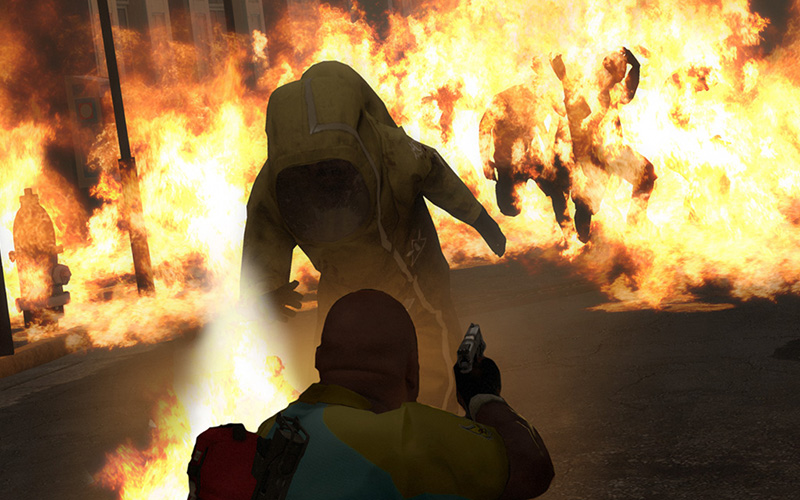
Follow the Liter is a mutation of far-and-away my favorite game mode, Scavenge. In Scavenge, two teams of players take turns as the survivor team, collecting as many of sixteen available gas cans as possible, and, subsequently, preventing the opposing team from doing so as special infected. Follow the Liter more strictly narrows the objective by allowing only a certain patch of cans to be collected at a time. A new patch spawns for collection as soon as the current has been dumped.
In Scavenge, the survivor-team has the upper-hand. Survivors are equipped to fell infected easily, especially experienced players who know what to expect. The challenge for infected is communicating coordinated, timely assaults that can incapacitate the survivor team. The trouble is, with cans spread widely throughout a level, infected players often have difficulty predicting where the survivors will aim for next, excepting that they're eventually guaranteed to fuel the generator. Therefore, infected players must be constantly communicating to be one step ahead of the survivors and pull off a successful gank, a task only experienced teams can negotiate. To be fair, survivors must also communicate direction frequently lest one of their team wander off in the wrong direction.
Follow the Liter is an excellent riff on Scavenge and, in my opinion, a superior game mode. Follow the Liter punctuates the core emotional qualities of Scavenge, more strictly defining the gameplay experience. Because infected have guaranteed knowledge of a survivor's run for cans, they can better prepare for the advance and coordinate a joint-strike. The middle-man of maintaining rank becomes much easier to manage and more minute planning takes precedent. Survivors are funneled into a choke-point each run for cans, and infected can focus on simply timing their spawns and locating specific spawn locations for optimal attacks rather than foolishly chasing down survivors in frustration or spawning into a shotgun from feeling rushed. The crux of the matter is that Follow the Liter, as opposed to Scavenge, allows the infected team to feel more powerful, in control, and dominating, boons of the horror trade and the source of enjoyment as infected characters. The mutation accentuates what is already so good about Scavenge by more strictly tightening the rules. The mode creates pressure. And every impact as a result is energized and charged with greater force.
As survivors, Follow the Liter at the very least encourages unified formation rather than allowing players to assume their own pairs and venture on improvised paths. On one hand, this structure of sequenced singular goals incites teamwork and cohesion, especially since players know to expect more effective attacks, and where. On the other hand, though, allowing only one present objective arguably stunts creativity, barring surprising and diversified approaches to can retrieval. In fact, I would say this is Follow the Liter's comparatively greatest fault, negating the myriad of styles of can collection offered to survivors, for two reasons. First, standard Scavenge is creatively liberal, offering multiple approaches for survivors. Part of the fun of scavenge is discussing with your team members and attempting the most efficient or surprising strategy to collecting cans. Second, the level and objective design of standard scavenge is nearly begging survivors to split up and open themselves to vulnerability. Much like the cave of wonders scene in Disney's Aladdin when Abu can't help touching the ruby despite both his own and Aladdin’s best interests, Survivors often have trouble working as a unit. Scavenge is invitation for schism between survivors, an invitation readily gobbled by keen infected. Staying focused and communicative is the mark of a good Scavenge team, something Follow the Liter arguably somewhat negates.
The last things I would like to mention about Follow the Liter is that rounds are shorter than Scavenge, a good thing, and that rounds are potentially more balanced because each team is required to run the same gauntlet as the opposition. Furthermore, mistakes are more harshly punished. A failed gank on any single patch of cans means two to three guaranteed points for the survivors and an additional forty to sixty seconds on the clock. Likewise, destroying cans, either as spitter or by tricking survivors into shooting them, bears greatly increased consequences, as survivors are unable to switch tacks for new cans, but must wait in agony for the destroyed to respawn, time ticking away all the while.
Healthpackalypse
For one main reason, I never played much Versus: I didn't feel as though my attempts as an infected had any impact on the survivors' progress. Versus is where the L4D elite go to play. Many players are so good at playing survivors, a less-than-perfect attack from an infected is swept easily aside. An infected team must perform flawless ganks to even remotely impact the opposing team.
Far more importantly, though, is the emotion derived from versus. As infected, a botched attack accomplishes nothing and is frustrating. One reason for this is because any damage dealt can be readily healed away with pills or a health pack. Suppose an infected player deals forty damage to a survivor before getting killed. The player may have even downed the survivor. No worries. The survivor just pops some pills or wraps up his wounds real fast. No harm done. All that effort, if not, in fact, wasted, feels wasted. Sure, that survivor wont be able to use his or health pack later on which may eventually cause trouble, but the present feeling of the infected is one of disappointment and failure. In my opinion, healing in Versus is a handicap, achieving not much more than to prolong deserved victory.
However, there is one reason I appreciate the presence of healing: the intellectual gamble of timely healing. People are greedy and arrogant. Players like to wait until the last moment to heal themselves because they want to horde their pills or health for as long as they are able. Unfortunately for them, their hubris is often their downfall, falling prey to infected before they “get the chance” to heal-up. Survivors acutely feel this balance of risk and reward because they do not want to use their health packs until they can receive the item's full benefits. Pills are a larger problem, in terms of game design, because they temporarily heal thirty health almost instantly, meaning they can be used at even 70% of full health and still receive the full benefit.
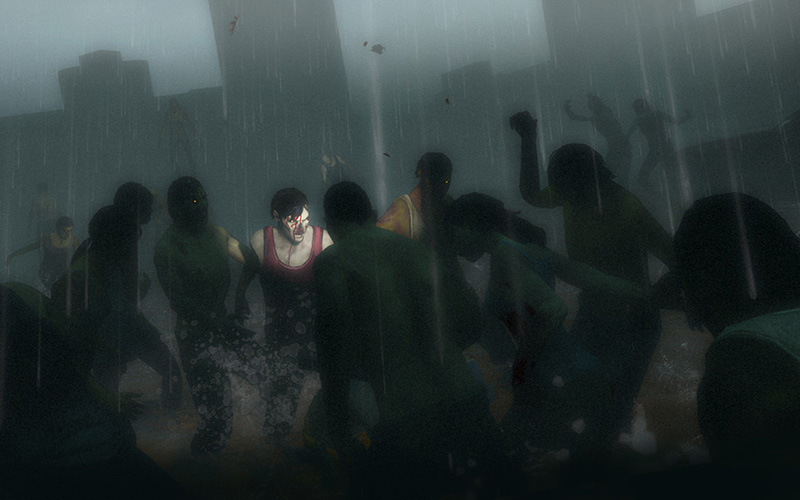
But I digress. Healthpackalypse is mutation of Versus, removing all health items from the game. No pills, no adrenaline shots, no health packs. Only a single health bar fast on it's way to depletion. Survivors can no longer heal-up and move on; any damage they sustain stays that way. This design has fascinating repercussions on the experience. Infected players have easier opportunity for more individual impact because even fifteen damage has an effect. It feels amazing to deal damage and relish the fact that your victims are unable to undo your efforts. However, for the very same reason, that any attack is damaging and has an impact, infected team-play is less essential. Teamwork and cooperation is still extremely effective, fun, and recommended, but the mutation lessens it's necessity.
Healthpackalypse for survivors, meanwhile, is a more tense, frightening, and suspenseful experience. Mistakes carry larger consequences because the Ctrl+Z function has been removed. Cooperation is vital. It is in a way the reverse of the affect upon the infected experience. Solo play is disastrous because healing is impossible. This incites unifying teamwork.
Valve's mutations are interesting revisions of their established game-types. As revisions, they offer different experiences, some positive, others negative. It's great to see a company still experimenting with what has been a proven success, stating that maybe there is room for improvement yet. Largely, I think at least these two mutations discussed help to accentuate the emotional qualities of the modes but dilute the intellectual qualities. And game design aside, as a marketing strategy, mutations are genius, hypothetically rejuvenating the established player-base while inspiring new customers. Especially when paired with Valve's approach to free DLC, like The Sacrifice coming October 5th, mutations are refreshing a game nearly a year into it's life, a long time for most video games.
Image Source
Labels:
Co-op,
coop,
experience,
experimentation,
L4D2,
left 4 dead,
Left 4 Dead 2,
revision,
valve
Wednesday, October 7
Optional Obligations
A few days ago, my friend was kind enough to show me iD Software's new Wolfenstein on his PC, I not having seen it yet.The game is a throwback first-person-shooter, favoring linear gameplay and intricate, gorgeous level design over the now-standard cover system or necessity for tactical forethought. Honestly, its great to see this type of shooter still in existence; Wolfenstein satisfied my Perfect Dark roots. Wolfenstein, however, does have its gameplay hook, veil powers, four abilities that allow players to enter the occult realm while granting them various boosts. Using veil powers drains an energy meter, though, so the spamming of or prolonged use of them is restricted. Or, at least, one would think.
Quite the contrary, spamming veil powers is not only easy but, potentially, inadvertently encouraged. Veil powers, you see, have absolutely no casting time and no cool-down time. That is, the veil powers require zero time to activate and zero time before they may be used again. This allows players to freely ignore "use sparingly," instead permitting "spam-at-will."
One of the veil powers is called "empower" (activated by "2" on the keyboard) You may watch a video of empower in action at this conveniently hyper-linked text. When activated, empower causes shots to do critical damage, often boosting damage to an extent that enemies fall with a single bullet. It may or may not be safe to assume that empower is meant to be used by players as a last resort, as it is particularly powerful and causes the energy meter to quickly dry up. But in reality, the functioning of the veil powers allows for a considerably more frequent use of empower, a use that could easily be considered cheap or cheating.
Players will take advantage of every gameplay possibility or quirk to be as effective and efficient as possible. My friend demonstrated to me how he played through Wolfenstein, by using empower every shot he took. 2 Click 2. 2 Click 2. Because before each shot he activated the ability and after each, deactivated, every shot he fired was charged with empower, . He also never drained his energy, as a fraction of a second is no where near long enough to affect the meter. Yet more efficient, he used minimal ammo. One shot, one kill.
"It's annoying," he said, "because I have to play as best as possible. I don't know. It's hard to explain." Wolfenstein allows players the option to spam its powers for maximum efficiency. Is it cheap to take advantage of this fact? Maybe, but it's also human. It's like the board game Clue. If you happen to glance Professor Plum in your opponents hand, it is very difficult to consider him a potential suspect. Once players realize that they can spam empower, is it really that easy to go back to pretending their supposed to use it sparingly? How optional is efficiency?
On one hand, constantly rapid-activating empower could quickly become tiresome and annoying. Aligning yourself with your interpretation of the game's intentions (use sparingly) could make for a considerably more enjoyable play-through; after all, the rules are there to maintain fun. However, as a person, who is both innately precise and also trained throughout one's life to be efficient, ignoring perfect execution is difficult.
I can speak for my friend, at least (and would be very interested in hearing your own opinion), that he felt obligated as a person of efficiency to take advantage of the rapid-use allowance of the veil powers. His rapid-use of empower completely side-stepped that whole "energy meter" thingy, which is obviously there to specifically limit use. It also breaks the difficulty system, which also is tuned to the limited use. Is the game better with the rapid-allowance? Is it more fun? This is something each player must answer for his or her self, but, unquestionably, its power to affect a player's experience, either by adhering to efficiency or forcefully ignoring it, is definitely something of which the developers should be aware.
Options aren't always so optional, I've found recently. The mere option itself may, to some players, feel mandatory. I think people assume too much with the "optional" angle. "Hey, why not throw in some side-quests?" or "Players can choose to help this NPC for extra benefits if they want." I'm sure the decisions aren't that trivial, but how many players really choose not to help that NPC? How many don't feel like side-quests are obligatory to maximize their character or see more story?
More specifically, an optional game feature which has particularly affected my play experience of late is the presence of collectibles. Who doesn't love collectibles? You get to search for hidden Easter-eggs, explore the crevices the game world, and unlock extra content or features in doing so. Additionally, collectibles expand not only gameplay objectives but invested time as well. But I believe that collectibles have an additional affect of hogging focus.
Several weeks ago, I played the then-new PS3 demo for Mini Ninjas by IO Interactive. I really enjoyed the game and would love to someday play through the whole thing. In fact, I came back to the demo several times, spending probably three hours or so memorizing the level and mastering the gameplay. The real reason I came back, though, was to find every flower, jizo statue, and trapped animal there was. I was obsessed with catching 'em all, with hunting down every collectible.
Eventually, I realized that my entire play experience had been acutely focused on finding things, a tunnel-visioned experience, rather avoiding of the peripheral elements of combat and progression. Every step I took, I made sure to back-track three and to rotate my camera 540 degrees, just to be sure I hadn't missed a single hidden item. Every time I fought, my eyes would be glancing to the corners of the screen, hoping to catch the glint of a coveted collectible. It didn't help that the game tracked how many you had found, either. For me, the collectibles were the primary focus of the game, obligatory, not optional. However, I read Edge Online's review of Mini Ninjas, and the reviewer had quite a differing opinion of the collectibles:
Similarly, playing through Batman: Arkham Asylum has shown me how collectibles can affect gameplay. "Detective Vision" in Arkham Asylum is an alternate vision mode, allowing players to see through walls, see structural deficiencies, highlights intractable objects (like grates and gargoyles), and, to get to the point, shows collectibles. Hidden question marks are painted around Arkham island that can only be seen in detective mode. There aren't even many question marks, to tell the truth, but the few that their are have contributed to me switching on my detective vision innumerable times through the game. Detective vision aside, I am constantly looking for hidden question mark statues, riddles, joker's teeth, interview tapes, and Spirit of Arkham stones. I have a mostly good time looking for them (although also annoying being so constantly present), and I enjoy when I succeed, but I can't ignore the nagging feeling that searching for collectibles occupies a significant amount of my gameplay focus. Now, there is no doubt that I am an OCD gamer, so I speak with significant bias, but I also know that the presence of collectibles impacts the play experience of many more besides me.
Collectibles, like other optional inclusions, come with a price: your players will want to find them. Collectibles may potentially detract from other spheres of gameplay, or at the very least, they should never be written off as "only optional."
Quite the contrary, spamming veil powers is not only easy but, potentially, inadvertently encouraged. Veil powers, you see, have absolutely no casting time and no cool-down time. That is, the veil powers require zero time to activate and zero time before they may be used again. This allows players to freely ignore "use sparingly," instead permitting "spam-at-will."
One of the veil powers is called "empower" (activated by "2" on the keyboard) You may watch a video of empower in action at this conveniently hyper-linked text. When activated, empower causes shots to do critical damage, often boosting damage to an extent that enemies fall with a single bullet. It may or may not be safe to assume that empower is meant to be used by players as a last resort, as it is particularly powerful and causes the energy meter to quickly dry up. But in reality, the functioning of the veil powers allows for a considerably more frequent use of empower, a use that could easily be considered cheap or cheating.
Players will take advantage of every gameplay possibility or quirk to be as effective and efficient as possible. My friend demonstrated to me how he played through Wolfenstein, by using empower every shot he took. 2 Click 2. 2 Click 2. Because before each shot he activated the ability and after each, deactivated, every shot he fired was charged with empower, . He also never drained his energy, as a fraction of a second is no where near long enough to affect the meter. Yet more efficient, he used minimal ammo. One shot, one kill.
"It's annoying," he said, "because I have to play as best as possible. I don't know. It's hard to explain." Wolfenstein allows players the option to spam its powers for maximum efficiency. Is it cheap to take advantage of this fact? Maybe, but it's also human. It's like the board game Clue. If you happen to glance Professor Plum in your opponents hand, it is very difficult to consider him a potential suspect. Once players realize that they can spam empower, is it really that easy to go back to pretending their supposed to use it sparingly? How optional is efficiency?
On one hand, constantly rapid-activating empower could quickly become tiresome and annoying. Aligning yourself with your interpretation of the game's intentions (use sparingly) could make for a considerably more enjoyable play-through; after all, the rules are there to maintain fun. However, as a person, who is both innately precise and also trained throughout one's life to be efficient, ignoring perfect execution is difficult.
I can speak for my friend, at least (and would be very interested in hearing your own opinion), that he felt obligated as a person of efficiency to take advantage of the rapid-use allowance of the veil powers. His rapid-use of empower completely side-stepped that whole "energy meter" thingy, which is obviously there to specifically limit use. It also breaks the difficulty system, which also is tuned to the limited use. Is the game better with the rapid-allowance? Is it more fun? This is something each player must answer for his or her self, but, unquestionably, its power to affect a player's experience, either by adhering to efficiency or forcefully ignoring it, is definitely something of which the developers should be aware.
Options aren't always so optional, I've found recently. The mere option itself may, to some players, feel mandatory. I think people assume too much with the "optional" angle. "Hey, why not throw in some side-quests?" or "Players can choose to help this NPC for extra benefits if they want." I'm sure the decisions aren't that trivial, but how many players really choose not to help that NPC? How many don't feel like side-quests are obligatory to maximize their character or see more story?
More specifically, an optional game feature which has particularly affected my play experience of late is the presence of collectibles. Who doesn't love collectibles? You get to search for hidden Easter-eggs, explore the crevices the game world, and unlock extra content or features in doing so. Additionally, collectibles expand not only gameplay objectives but invested time as well. But I believe that collectibles have an additional affect of hogging focus.
Several weeks ago, I played the then-new PS3 demo for Mini Ninjas by IO Interactive. I really enjoyed the game and would love to someday play through the whole thing. In fact, I came back to the demo several times, spending probably three hours or so memorizing the level and mastering the gameplay. The real reason I came back, though, was to find every flower, jizo statue, and trapped animal there was. I was obsessed with catching 'em all, with hunting down every collectible.
Eventually, I realized that my entire play experience had been acutely focused on finding things, a tunnel-visioned experience, rather avoiding of the peripheral elements of combat and progression. Every step I took, I made sure to back-track three and to rotate my camera 540 degrees, just to be sure I hadn't missed a single hidden item. Every time I fought, my eyes would be glancing to the corners of the screen, hoping to catch the glint of a coveted collectible. It didn't help that the game tracked how many you had found, either. For me, the collectibles were the primary focus of the game, obligatory, not optional. However, I read Edge Online's review of Mini Ninjas, and the reviewer had quite a differing opinion of the collectibles:
It’s a peculiar miscellany of diversions that, along with the game’s uniquely soothing cartoon-fauvist style, sets a meditative pace. In between skirmishes with samurai, you find yourself wandering amiably through quiet twilight woodlands to search for ingredients or bobbing on a river with a fishing rod while peach blossom descends.For some people, optional means optional, maybe more of a little surprise to happen upon a collectible than a die-hard manhunt. But that is not to say I did not enjoy myself. Rather, I loved searching for the collectibles. I didn't come back to the demo because I felt like I had to. I came back because I wanted to. However, it is important to note that the optional existence of collectibles greatly affected my play experience, diverting attention from other potential foci of the game such as combat. I do not believe this to be a good nor bad thing, just an affect of which, again, I believe people should be aware.
Similarly, playing through Batman: Arkham Asylum has shown me how collectibles can affect gameplay. "Detective Vision" in Arkham Asylum is an alternate vision mode, allowing players to see through walls, see structural deficiencies, highlights intractable objects (like grates and gargoyles), and, to get to the point, shows collectibles. Hidden question marks are painted around Arkham island that can only be seen in detective mode. There aren't even many question marks, to tell the truth, but the few that their are have contributed to me switching on my detective vision innumerable times through the game. Detective vision aside, I am constantly looking for hidden question mark statues, riddles, joker's teeth, interview tapes, and Spirit of Arkham stones. I have a mostly good time looking for them (although also annoying being so constantly present), and I enjoy when I succeed, but I can't ignore the nagging feeling that searching for collectibles occupies a significant amount of my gameplay focus. Now, there is no doubt that I am an OCD gamer, so I speak with significant bias, but I also know that the presence of collectibles impacts the play experience of many more besides me.
Collectibles, like other optional inclusions, come with a price: your players will want to find them. Collectibles may potentially detract from other spheres of gameplay, or at the very least, they should never be written off as "only optional."
Labels:
experience,
mini ninjas,
obligation,
optional,
powers,
wolfenstein
Subscribe to:
Posts (Atom)
